
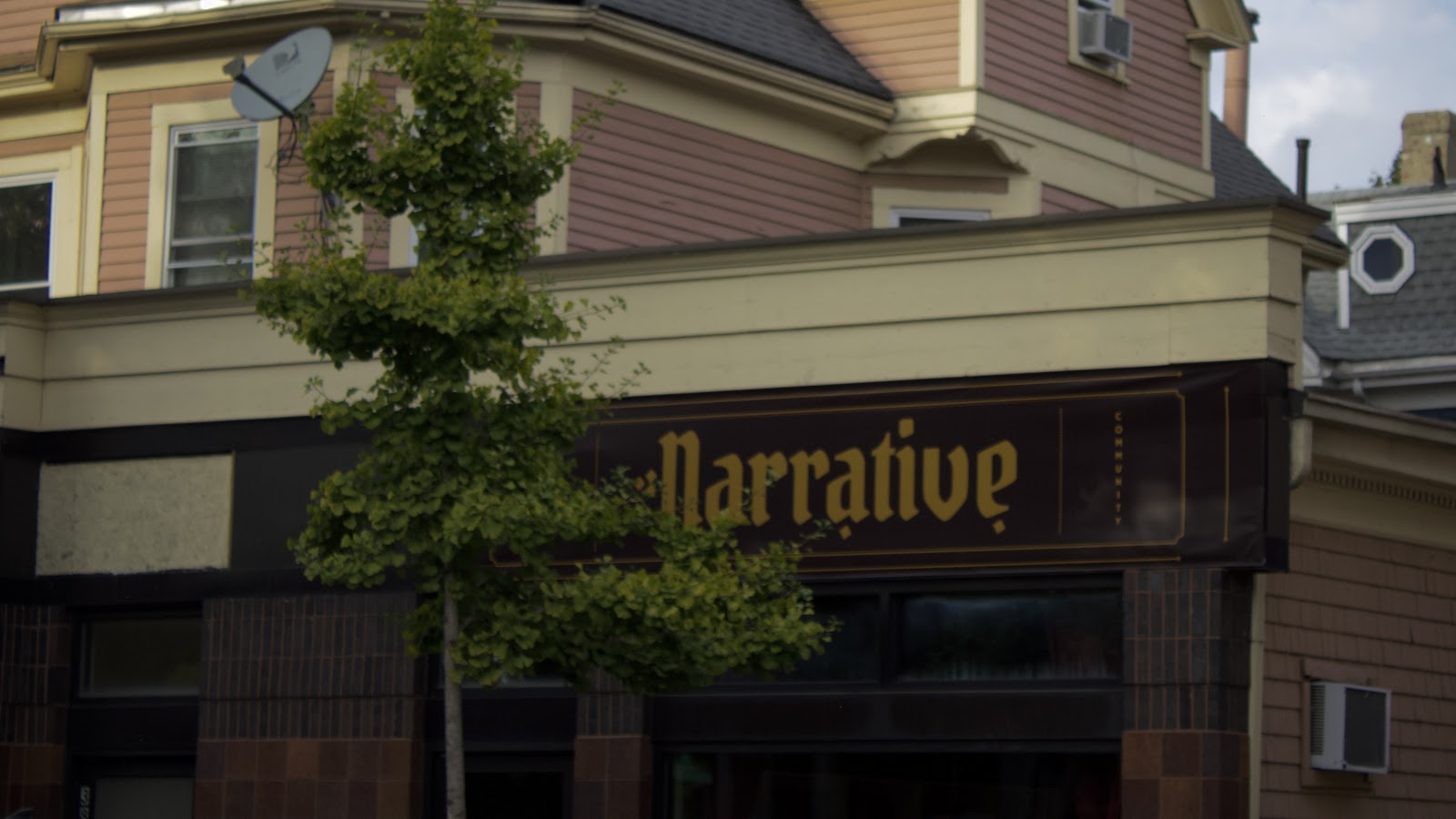
After walking through the busy streets of Davis Square in Somerville, the atmosphere of Narrative Bookshop is a total reset to the system. The pasted-pages layered over the fluorescent lights cast a warm tone over the storefront, its books carefully curated and organized. The personal touches set to draw people in is an honest effort by Mila Hossain to make her solo-run store feel like home to all who enter, a central part of what drove her to open a bookstore of her own.
Narrative Bookshop opened its doors in August 2024 with the goal of curating a collection of stories underrepresented by Western media, with a particularly heavy focus on immigrants, victims of racialization and otherwise silenced and marginalized voices.
When asked about the name Narrative, Hossain explained, “Nothing’s really in isolation. We’re all woven together within this giant narrative, and all of us matter. The [goal] is to create a place where people can come here to find their narrative, or expand their own, … or learn about a different narrative that you’re fully unfamiliar with in your own life experience.”
Hossain is a Bengali immigrant and wanted to give her community the type of space she yearned for upon arriving in the United States in her youth. Her efforts paid off — the very premise of her mission alone nearly sold out her store on opening day, and the events she hosts continue to draw in a loyal customer base, who offer an outpouring of gratitude back.
“The crowd has always brought something really nice, and whenever authors visit, they always say ‘This is so… different,’” she recalls, thinking back to some of the book launches and signings she’s gotten to host. “There’s a significant and palpable sense of community, and I hope that keeps. It’s crazy that it’s not something I had to drill in, or make an announcement about.”
With the intimate nature of the stories and experiences she fosters and how well-received they’ve been, it’s no surprise that people always return.
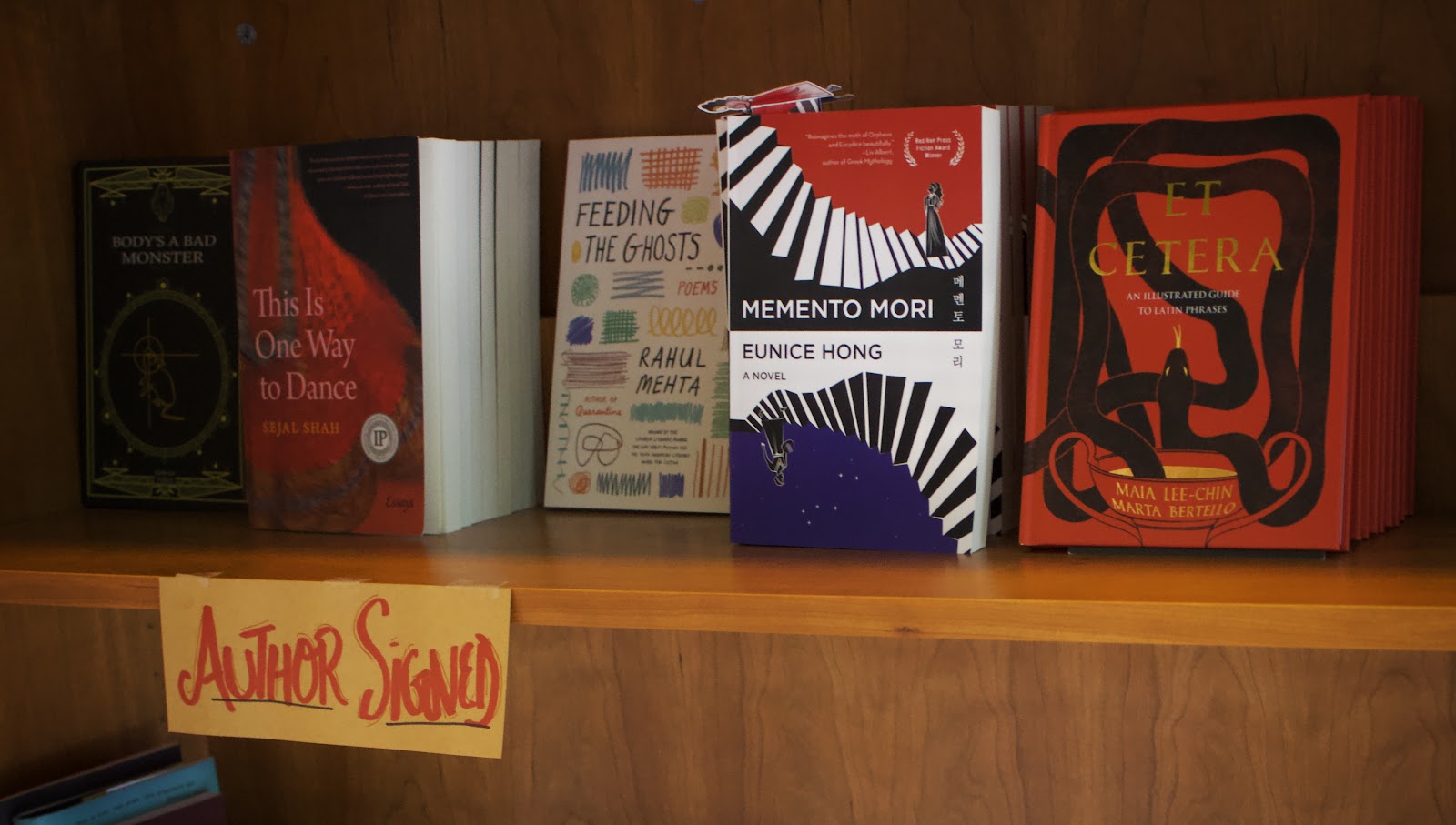
In the time the bookstore has been open, Hossain has had encounters that have really resonated with her. From visitors crying upon seeing their names in books for the first time to meeting authors who embodied their experiences in text, the store offers a home to voices that are so often lost — and a place to rest in the face of loneliness.
“On my launch day, a lot of Bengali people made it a point to come [visit] … And my mother [who joined that day] speaks mostly in Bengali, so it was really nice to see her be able to socialize — she’s such a social person, but she doesn’t often get to express that side of her because of the language barrier,” Hossain said.
Moments like these are what make Narrative as impactful as it is, as well as the emerging voices of the books the store uplifts. “Representation and being seen is so important. Clearly the demand is out there, [and] the books are out there … So there’s absolutely no reason these books shouldn’t be showcased and easier for people to find,” Hossain asserted.
Hossain is always taking requests and recommendations on stories and writers to add to the rotation as well, with a specifically community-curated shelf being a long-term ambition of hers. If an absence of a particular narrative is found, she works with the connections she’s made to find a book to fill that vacancy with solidarity instead.
The mission of Narrative only grows more important as the turbulence of the political climate makes the need for a safe haven more prominent than ever. In designing the store itself, the genuine nature of the family furniture and antique lamps open the air for close conversation. Even the deep greens and gold tones of the logo and walls aim to contribute to that message.
“If you look [at] different things from Bengali culture, … things are put together in a way that the Western style would say doesn’t [work], but there’s beauty in the contrast. And that idea just goes really well with the whole mission and values infused into this place,” Hossain said.
Hossain continues to leave the floor open for the stories themselves to unfold, whether it be through the novels that land on the shelves or the connections made during open-mic nights. Through this, she lives out her own mission and aids in writing a more wholesome narrative for herself and those around her.
“We all [act as if] we don’t have to care about certain other people because they’re so different from us, when there’s actually a lot of beauty in the differences [and there’s a lot] to learn there,” Hossain said. “We all do fit together in one way or another.”
This article appeared in print on Page 8 of Vol. LIX Issue X, published Feb. 10, 2025.