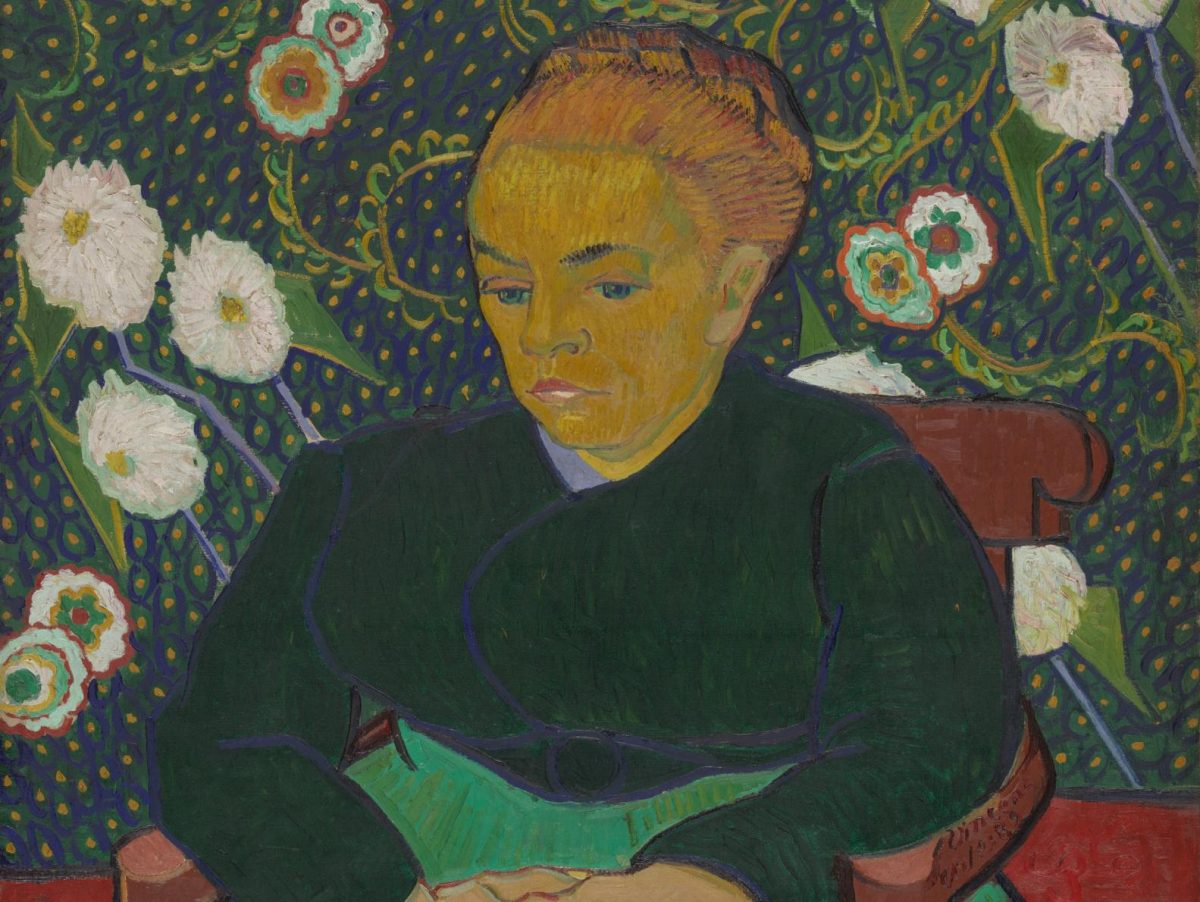
The Museum of Fine Arts in Boston is hosting an exhibition of Vincent Van Gogh’s portraits of the Roulin family until Sept. 7.
Important to the exhibit is its exploration of themes of mental illness, as described by Art Historian Laura Prins in an interview on the MFA’s website. Prins is an expert on Van Gogh and his reputation for being unstable as well as creative. Van Gogh notably cut off his ear at 35, and ultimately took his own life at the age of 37. These events became inextricably linked to his image as an impulsive and troubled genius.
Prins, however, does not believe that a relationship between Van Gogh’s mental illness and talents as an artist can be proven, and does not feel that mental illness is a predictor of an artist’s capacity to produce great work. According to Prins, Van Gogh himself did not necessarily want to encourage the idea of mental illness as a motivator, despite there being speculation during his lifetime about the relationship between his own mental suffering and his work.
Prins takes interest in the image of a “mad genius” often associated with Van Gogh. Indeed, Van Gogh’s image as a suffering artist may very well have helped popularize the stereotype of artists inevitably having tortured souls. “The idea of being this suffering artist became so popular that as an artist you could use that image to sell your work,” Prins said.
In 2016, Prins helped curate “On the Verge of Insanity: Van Gogh and His Illness” at the Van Gogh Museum in Amsterdam. In a 2023 lecture on the artist, she stated that Van Gogh even “felt his body was a burden” — which might explain the drastic step of severing his ear.
However, Prins emphasized that, in her view, art is inspired by artistic interest and talent, not mental illness. She explained how in Van Gogh’s letters, he writes rationally about his art and his artistic choices. Still, she acknowledged that many people still link his artistry with mental instability.
One issue that comes up when discussing “tortured” artists in any medium is the extent to which mental illness fuels creativity. Van Gogh wrote in a letter to his brother Theo, “The more I become dissipated, ill, a broken pitcher, the more I too become a creative artist.”
The link between mental turmoil and creativity can, of course, be glorified. In 2014, Lana Del Rey said in an interview she wished she was “dead already” while mentioning heroes like Kurt Cobain and Amy Winehouse, both troubled and acclaimed musicians. “Suicide” is the name of a band with an album in Rolling Stone’s Top 500 Albums of All Time. Even Van Gogh, in another letter to Theo, referred to himself and some of his colleagues as “the new painters, alone, poor, treated like madmen and, as a result of this treatment, becoming so in fact.”
According to the American Psychological Association, Gen Z is more likely than previous generations to describe their mental state as fair or poor. Since many current students are members of this generation, common stressors identified by the APA, like finances and housing insecurity, often present themselves within the student body. In an interview for WBUR in 2024, UMass Boston Chancellor Marcelo Suarez-Orozco expressed concern about a report issued by the city of Boston indicating that mental health issues in Boston were on the rise, particularly among young people.
UMass Boston’s community is not known for its abundance of severed ears. But some students do feel ill and alone, some are poor, and some may be treated like madmen when things become overwhelming and start to affect their behavior.
Van Gogh’s darkness is somewhat at odds with the vivid, bright colors of the Roulin portraits. Indeed, Southern France, where he painted much of his best known work, is not associated with gloom and doom in the same way as, perhaps, Seattle or Scandinavia. The lasting success of Van Gogh’s oeuvre allows for a somewhat happier ending to the larger narrative of Van Gogh’s life.
The question of whether Gen Z will enjoy lasting success despite current mental stressors has yet to be answered — there are a number of factors that could influence the outcome. But Van Gogh’s work and widespread appreciation more than a hundred years after his death are a reminder: a person’s success can outlast the person themselves.