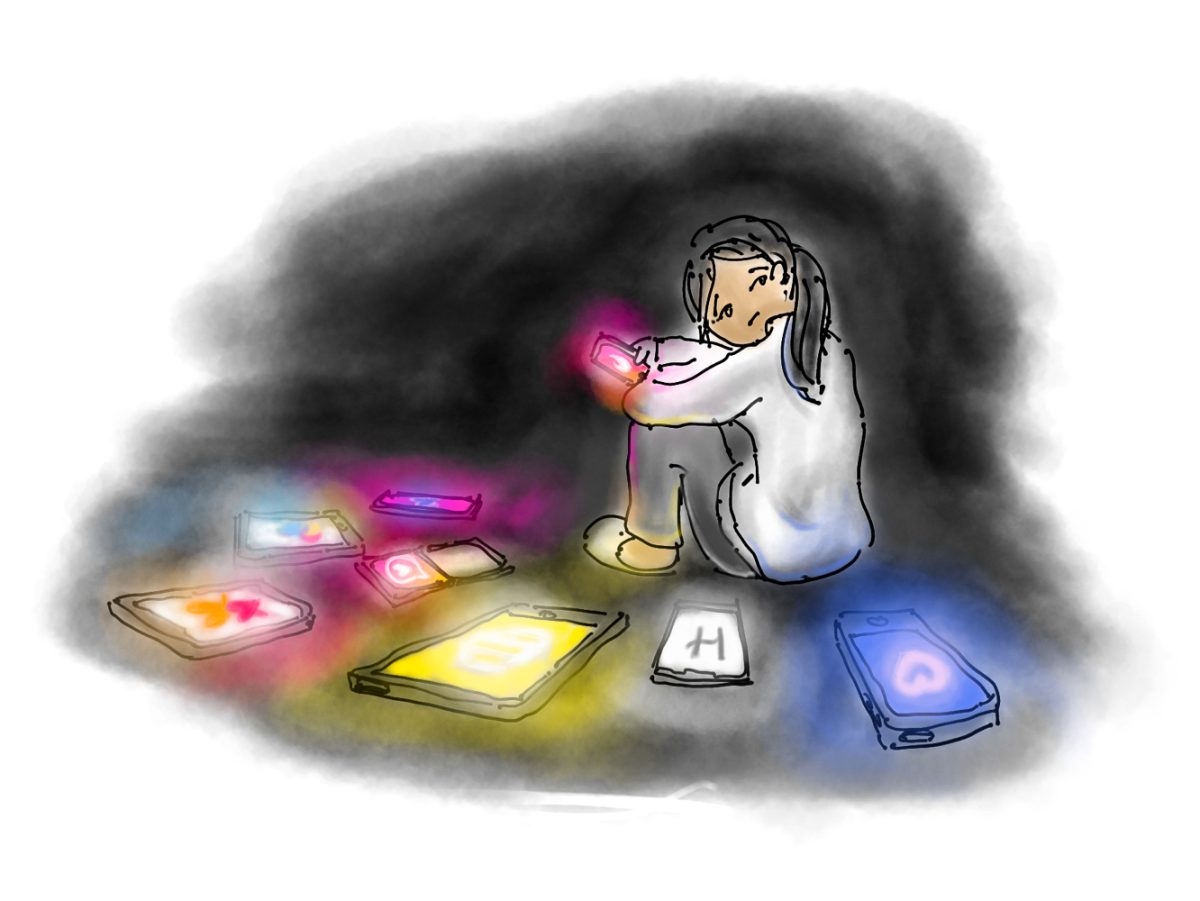
The emergence of dating apps in the early 2010s forever changed modern love. With just a few swipes, your future partner could be found. But the apps intended for new connections and falling in love do the opposite of their advertised use, all for a quick buck.
Dating apps have commercialized love. Love, one of the few things you don’t have to pay money for, now requires a subscription to obtain.
Tinder offers its users three tiers of subscriptions: Tinder Plus, Tinder Gold and Tinder Platinum.
With its highest tier going for $50 a month, you would think they would be paying for your date! Unfortunately, high prices don’t always mean high quality.
Dating apps like Tinder have become love and connection salesmen. As salesmen, they need to make sure they have a high demand for what they are selling. If dating apps did what they were supposed to do — help people find love — they would eventually run out of customers.
To keep their clients, dating apps create a cesspool of loneliness. Their interface and app culture generate superficiality, apathy and a lack of accountability.
A user could swipe through hundreds of different people without ever having to leave their bedroom, in five minutes or less. This sort of cheap social interaction desensitizes users to meeting new people. Meeting someone new no longer requires being polite. Don’t like them? Swipe them away!
When using a dating app, we base our swiping decisions on surface-level observations. If someone’s looks do not fit a preconceived idea of what’s “attractive,” a left swipe may be given without a second thought. But this method of judgment ignores just how complex human interaction really is.
Love at first sight is a scam. Love only happens when people truly get to know one another. When finding the love of your life on an app requires a person to judge others almost solely on looks, true love becomes almost impossible.
Real human connection takes time and effort. You have to find the courage to go up to someone without fear of rejection. You have to keep them interested and find topics you can converse about — and that’s only the initial meeting. A real-life connection between two people would never survive with the same amount of effort put into online connections.
In real life, ignoring people while they talk or pretending that they do not exist would be socially unacceptable. So why is it that when we do it on an app, it is okay?
Ghosting, a byproduct of online dating culture, is no longer seen as immoral. To have someone express interest in you and start to build a connection — only to have that connection ripped away without explanation or warning — hurts.
Ghosting is not the only result of a general lack of care on dating apps. The specific types of relationships promoted on the apps are ambiguous and non-committal. You no longer have to say you’re dating someone; labelling it a “situationship” will do just fine.
When your next romantic prospect is only a swipe away, the thought, “What if the next person is better?” can be hard to let go of. Long-lasting and complex human connections are once again prevented from forming by the promise of ambiguity and non-commitment.
As a past user of dating apps myself, I understand that they aren’t all bad. Some have found genuine connections using them before, and it can be hard to find people to connect with when the number of spaces other than home or work in which to socialize is on the decline.
But for the most part, the culture cultivated by dating apps contributes more to the loneliness and antisocial epidemic. The more lonely people there are, the more profit dating apps make. Dating apps want you to be single and alone so that the time and money you spend on their apps becomes a never-ending source of income.
It is time to rethink how we use dating apps. A great idea meant to help people has turned into planning loneliness for a profit. Remember, fast connections don’t necessarily mean genuine ones.