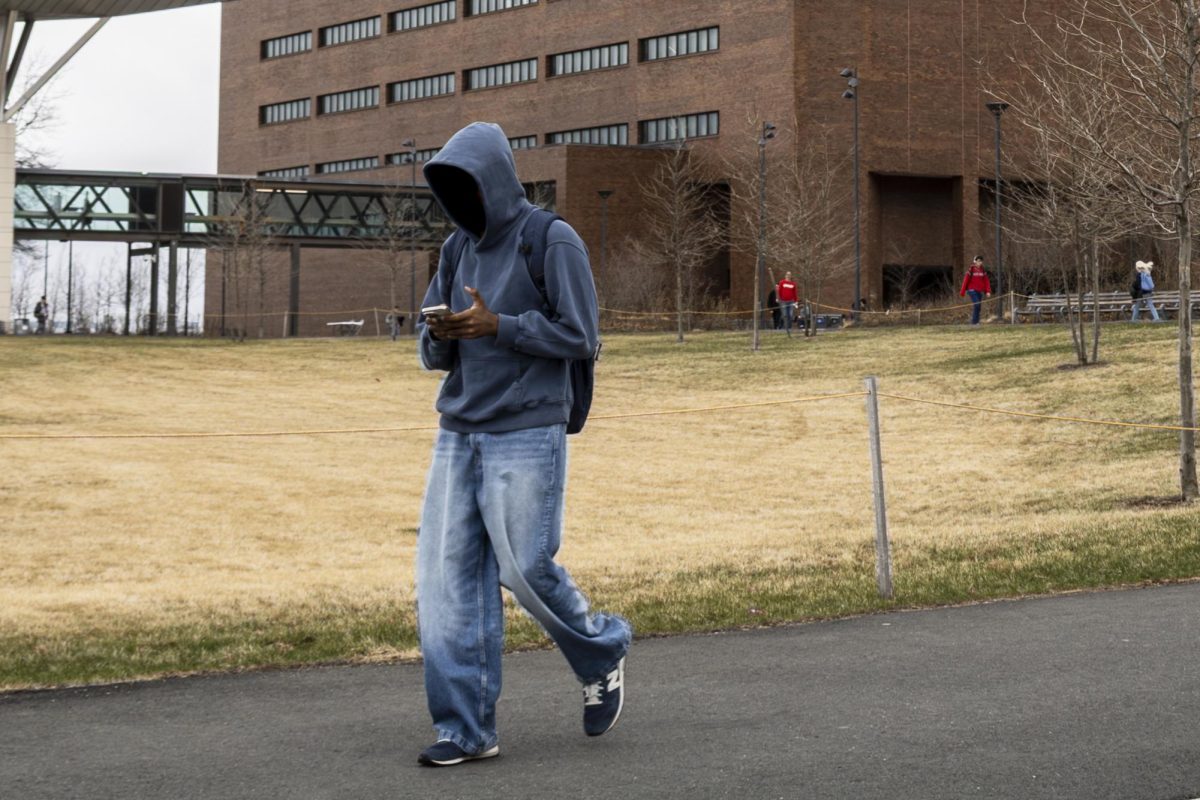
Prolonged screen time and phone addiction are rewiring our brains’ reward systems.
No longer are real-life conversations enough to please us: We now require constant entertainment. Quick gratification becomes a need, while our social lives suffer because of it. Necks craned over, backs hunched, fingers flicking mindlessly and irritated eyes unmoving. How can we expect social interaction to take place when everyone looks like uninviting creatures of the night?
I have been at UMass Boston for almost three years now, and I can’t say I’ve made a single friend. Sure, there are people I might wave at in the hallway or have a quick chat with in class, but a real friend, one who makes the effort to contact me outside of school? I just can’t say I have that.
Now, I could blame it on UMass Boston’s lack of student life. We’re a commuter school, so everyone is in and out of here with no time to socialize. Or, I could blame it on myself. Maybe I’m just not putting myself out there. Maybe my breath smells so bad that I repel any potential friends.
I think modern cell phone usage jeopardizes any chance of social interaction that our unfriendly university grants us. Never before has the ability to be, or at least look, preoccupied been so readily available at our fingertips. The act of doing nothing is now something to be embarrassed about. God forbid you have some free time in-between your classes. It feels like you have only two choices — either look busy, or be hunted down by an angry mob, pitchforks in hand.
Your phone is a social buffer. Don’t eat alone like a loser. Don’t stand around at a party like a dork. Pull out that phone, and suddenly you’re an untouchable god, far too occupied to be concerned with the social interactions of common folk.
When I finally work up the courage to talk to someone, and they pull out their phone to scroll on YouTube Shorts, I fight the desire to scratch out my eyeballs. I refuse to believe a story told by AI over a video of Subway Surfers gameplay is truly more enticing than the prospect of my friendship.
Not only is it annoying, it is demeaning. I begin to second guess myself. When I am in a social setting and people are on their phones, I start to think my company is taxing and not worthwhile. I get anxious and fight the urge to hop on the bandwagon and whip out my phone.
Just this last month, my driving instructor was scrolling on Instagram Reels while “instructing” me. Did he crave death? Maybe. Never mind making friends — phones might kill me on the road before I get the chance to drive.
While our obsession with distraction consumes us, opportunities, in a life only gifted to us once, will unknowingly pass us by. It is time to give boredom a chance. It is in precisely these moments of doing nothing, of being present, where interactions, either briefly pleasing or life-changing, are able to take place.