
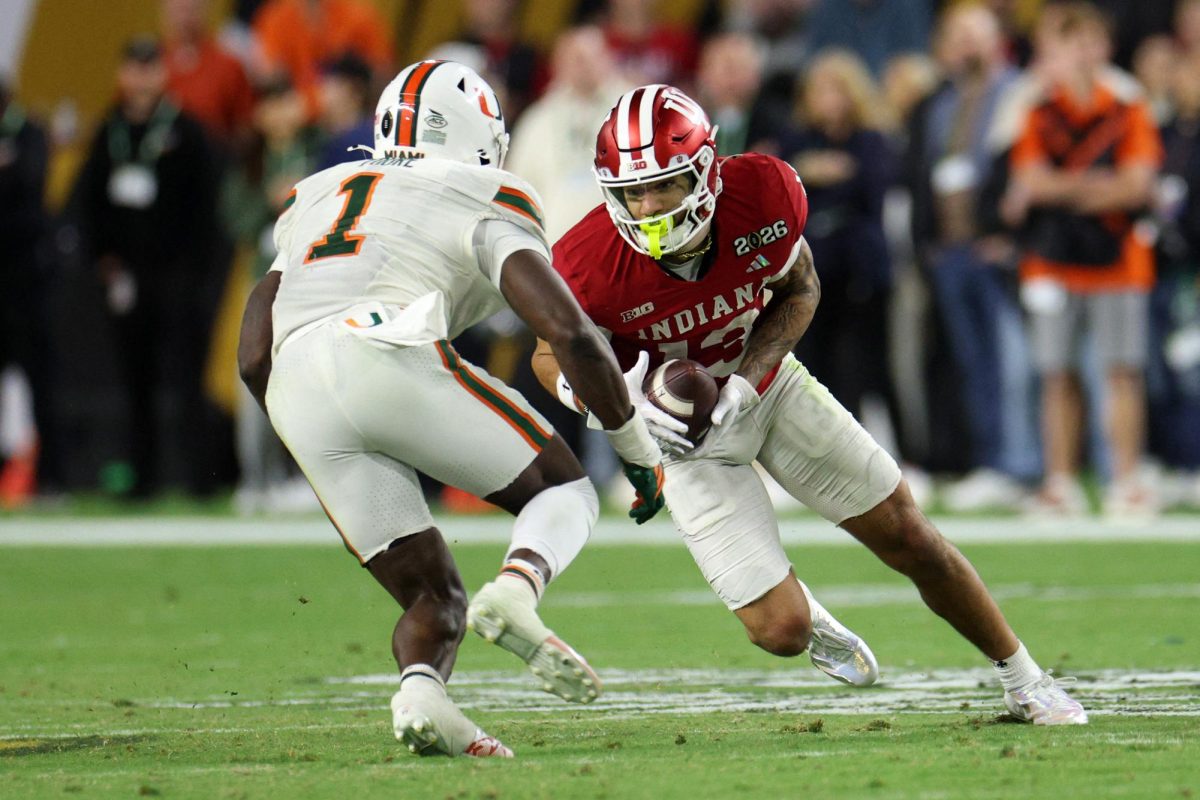
Perhaps one of the most divisive subjects in sports is the NCAA’s overactive transfer portal. What was meant to provide athletes with freedom has instead turned college sports into an unregulated bidding war.
Established in 2018 by the NCAA, the transfer portal was created to streamline what had once been a tedious transfer process for collegiate athletes and programs. It made switching schools a realistic and accessible option for players. What has since complicated the portal — and college athletics as a whole — is the rise of name, image and likeness, which has turned money into a central factor in transfer decisions.
The transfer portal now mirrors professional sports’ free agency rather than amateur athletics, with many high-profile athletes receiving multimillion-dollar offers to change schools. While that shift may have been inevitable, the infancy of both the portal and name, image and likeness has been exposed by the NCAA’s failure to establish and enforce clear regulations, which many programs have been quick to exploit.
The College Sports Commission issued a memo to athletic directors across the country Jan. 9, addressing the concerning state of college athletics following what has been a hectic few weeks in college football’s transfer portal. The CSC, the main regulatory body for name, image and likeness, said it has “serious concerns” with some of the terms offered to players.
One of the commission’s main concerns involves reported multimillion-dollar deals being offered to athletes. Under the terms of the 2025 House settlement that established the rules for name, image and likeness payments directly from athletic programs, schools are permitted to share revenue directly with players from a pool of $20.5 million. However, many schools are instead relying on third-party deals from businesses who back their programs to work around that revenue-sharing limit and extend multimillion-dollar offers.
The issue with these third-party deals is the lack of oversight. They are not regulated by the CSC, and many schools fail to report them through the commission’s reporting system, NIL Go, where deals are evaluated for a valid business purpose and whether the compensation falls within a fair market range.
“Making promises of third-party NIL money now and figuring out how to honor those promises later leaves student-athletes vulnerable to deals not being cleared, promises not being able to be kept, and eligibility being placed at risk,” said the CSC in the memo.
One recent example highlighting the growing complexity of the transfer portal involved University of Washington quarterback Demond Williams Jr.
Williams announced Jan. 6 his intention to leave the university and enter the transfer portal. Just two days later, however, he reversed course and opted to return to Washington amid reports that the school was willing to “pursue legal avenues” to enforce Williams’ name, image and likeness contract with the university.
Williams’ situation is far from an isolated case. Entering the transfer portal has become a common strategy for college athletes looking to maximize their name, image and likeness opportunities. But as schools increasingly rely on third-party contracts that bypass the standards put in place to protect athletes, the landscape of college athletics grows more unstable and increasingly difficult to navigate.
Unreported deals leave athletes vulnerable, with no real guarantee that the compensation they are promised will ever materialize. Multi-million dollar contracts may appear attractive, but when those deals are sourced through third parties and left unregulated, payment is far from guaranteed.
I am all for college athletes being paid, especially given the enormous profits they generate for their schools. But the current transfer portal and name, image and likeness landscape is inherently flawed and in need of serious reevaluation if the goal is to protect the athletes it was meant to empower.
Correction: A previous version of this article mischaracterized a quote from the CSC. The regulatory body’s “serious concerns” stem from deal terms offered to players, not the transfer portal itself.
