
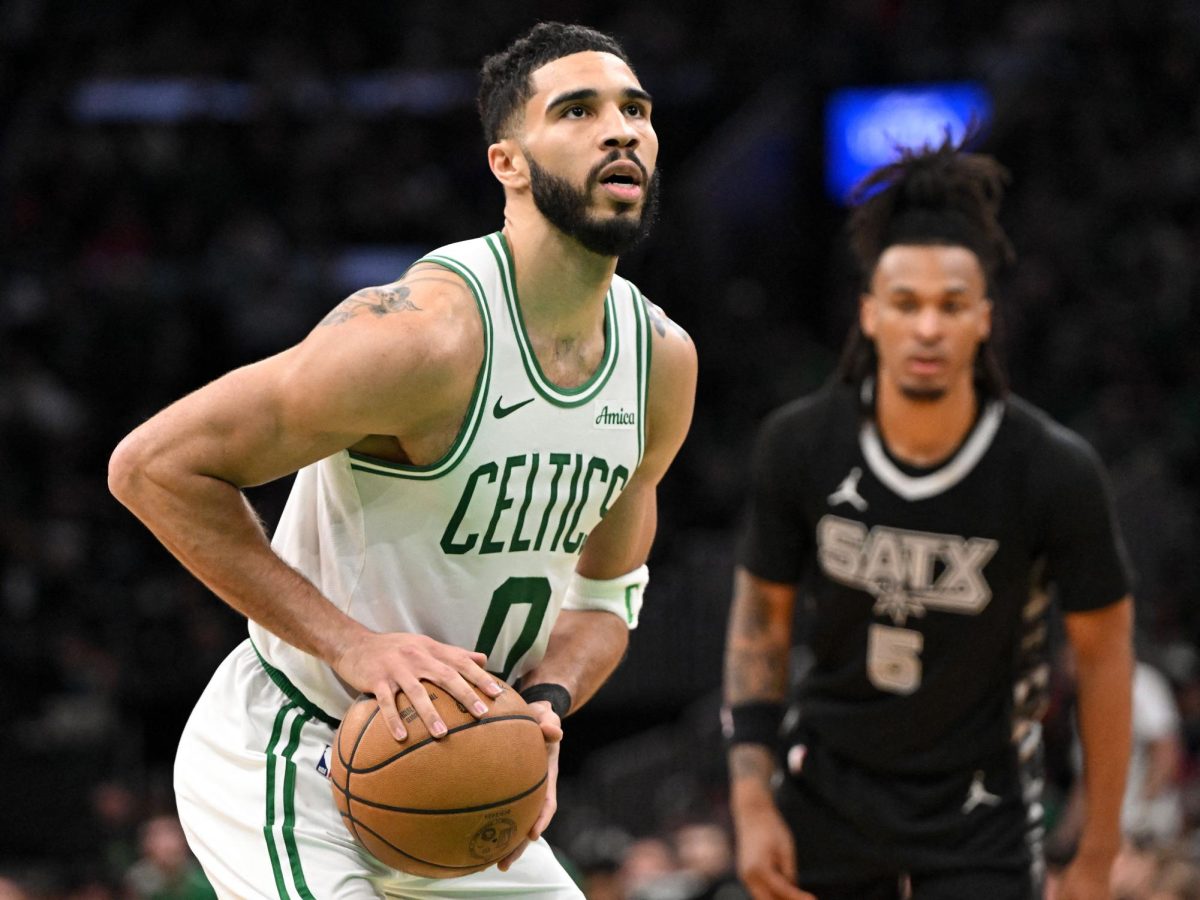
Despite the Boston Celtics defying the odds and emerging as one of the Eastern Conference’s top contenders heading into the NBA’s All Star break, the biggest storyline surrounding the team all season has been Jayson Tatum’s recovery from the Achilles tear he suffered in May during the 2025 playoffs.
Tatum’s progression has been spectacular. It seems that each and every new update surrounding his recovery process indicates that he is a medical revelation with how quickly he has been able to rehabilitate himself and get back into basketball shape.
The initial expectation at the time of his injury was that Tatum would be sidelined for the majority — if not the entirety — of the 2025-26 season. However, recent reports have suggested that the Celtics superstar’s recovery timeline has accelerated to the point where a return as early as March is not out of the question.
The intrigue surrounding Tatum’s return has only been heightened by the Celtics’ success thus far. Little was expected from a team without their superstar talent, yet the Celtics have proven the team is still positioned to compete and make a deep run in the playoffs.
While the allure of adding Tatum to a championship-caliber team is substantial, I think the urgency surrounding his return is being overstated. Yes, integrating an all-NBA talent into a top-ranked team seems like a no-brainer, but this situation is a lot more complicated than it seems.
When dealing with an injury as severe as an Achilles tear, there is no need to rush the process. The goal of recovery is not simply determining when Tatum can return to the court, but when he can return as his All-Star self.
History has shown that many players who have suffered Achilles tears have difficulty returning to their pre-injury level. Even after a full recovery, it can take time to regain the athleticism and skill needed to compete at basketball’s highest level.
The blueprint for recovering from a torn Achilles is Kevin Durant. After tearing his Achilles in June 2019 as a member of the Golden State Warriors, Durant spent roughly 18 months rehabbing before returning to an NBA game in December 2020. Now 37, he has continued to play at an All-Star level deep into his career. Durant has described the rehab process as “tedious” and “long,” but his patience clearly paid off, allowing him to bounce back from such a devastating injury.
Tatum, who is only 27, suffered the injury during the prime of his career, but he is young enough where he can return to form so long as he is patient and intentional with his recovery, as was Durant.
Another tricky part of returning from injury is reintegrating into a team midway through the season. It’s hard to argue the Celtics would be worse with Tatum back — even if he’s not 100% — but this year’s team has built a rhythm and identity without him, and it’s working.
Tatum discussed “the challenges” of returning in an appearance on “The Pivot Podcast” Jan. 27, even suggesting he may sit out the rest of the season because reintegrating midseason is difficult.
“It is a thought: Do I come back? Should I wait?” Tatum said. “It’s something that I honestly, recently, in the last two weeks or so, just kind of contemplate every single day.”
Getting back into playing shape during a playoff push is a lot to ask for any player, much less a superstar. If Tatum returned in March, he would have only a short window to acclimate before the intensity of the playoffs hits, where every aspect of the game intensifies dramatically.
It’s undeniable that the best version of the Celtics includes Tatum, but this year’s squad has proven they can survive without him. While it will ultimately be Tatum’s decision whether he will make his return to the court this season, I encourage Celtics fans to roll back the push for Tatum to return and understand that his recovery is a long-term process.
