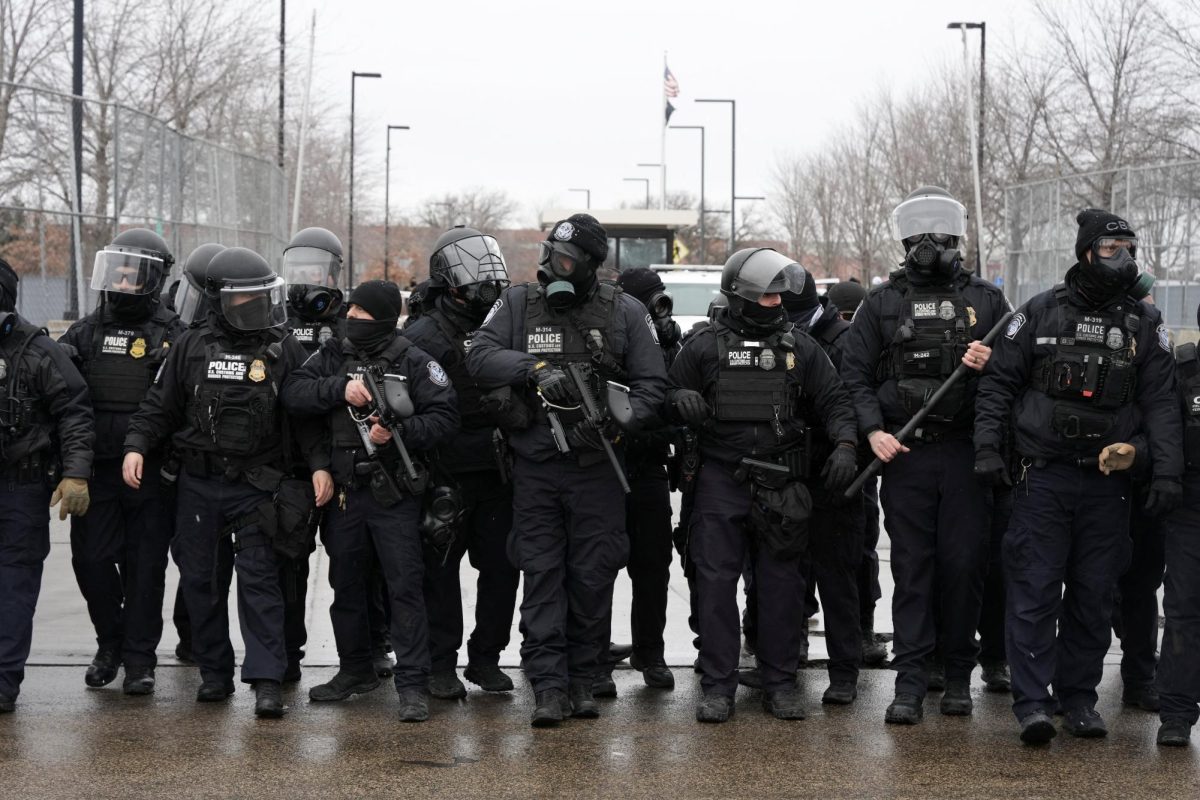
The Trump administration’s recent crackdown on immigration has instilled fear in the minds of good, hardworking Americans.
People who are citizens are being kidnapped and murdered by U.S. Immigration and Customs Enforcement. There is public outrage — reasonably so — when ‘good’ people are targeted, but a person’s moral standing and legal status should not matter; the department’s actions are condemnable no matter who their victims are.
The tactics of ICE are labelled as wrong because of the identities and actions of those who are targeted. How dare they murder a mother of three? How could they justify attacking and kidnapping an unarmed man? But what about those who don’t fit into the box of the ‘perfect victim?’
It shouldn’t matter whether a person is “good” when our collective interpretation of “good” is scattered and skewed by implicit and explicit biases. Racism and xenophobia can pollute our conceptions of a good person, so when those affected by such biases get into violent and traumatic situations, it goes unnoticed.
When ICE targets people of color, such incidents are treated as just another common occurrence. Pity may be allocated to them, but there is no real outcry of injustice. Few actions are taken, and the status quo is not disrupted.
Following the death of Rene Nicole Good, a white 37-year-old citizen and mother of three, shockwaves were sent throughout the nation. The way Good was treated by U.S. immigration authorities was disgusting, and the public outcry is completely warranted. Yet, when the same atrocity is committed against a black man, like Keith Porter, many never even know it happened.
Porter was killed by U.S immigration authorities Dec. 31, almost a week before Good. He was a parent and a citizen, just as Good was, yet I am willing to bet on the fact that the majority of those speaking out on Good’s murder have never even heard of Porter.
Isaias Sanchez Barboza, Jose Castro-Rivera, Silverio Villegas González, Roberto Carlos Montoya Valdez and Jaime Alanis are all names of people who were victims of violent actions from U.S. immigration authorities. Their deaths went unnoticed because their treatment was seen as normal based on their racial or ethnic profile.
When we try to defend victims of ICE with statements promoting their morality, we undermine the actual problem. The reality is that humans are being killed and taken into custody without probable cause. Someone could have an extensive criminal record, be in the country illegally or have a weapon on them — it still wouldn’t justify ICE murdering or kidnapping them.
It has become a matter of cherry-picking who is and who is not human and deserving of human rights. We all have a right to remain silent. We all have a right to bear arms and due process.
Someone who contributes absolutely nothing to society is still human and should have access to the rights that everyone else has. You shouldn’t have to be seen as an angel in order for your murder to be condemnable.