
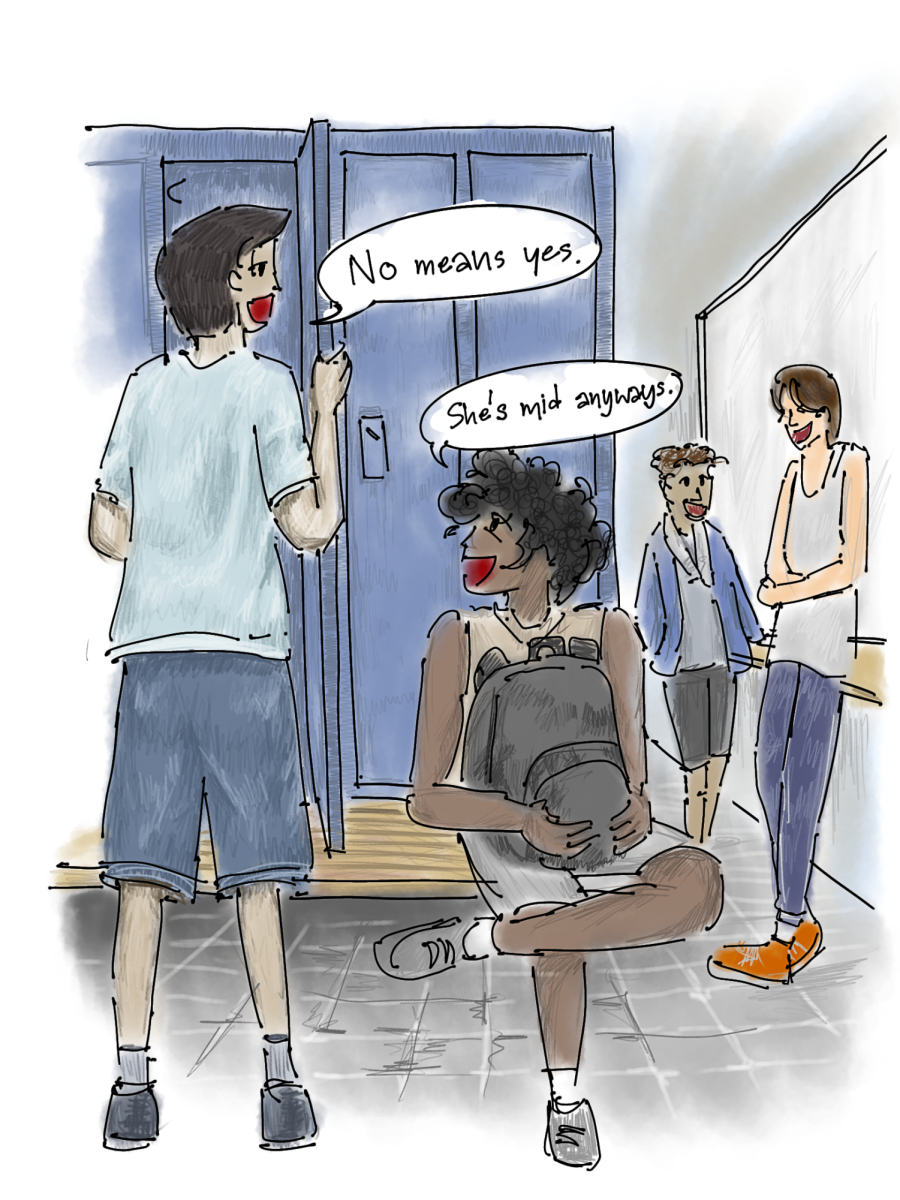
Women in the United States are making their way up the social ladder, but misogyny still looms in our culture, usually only visible to those victimized by it. Maria Evteeva, in an article, “Internalized Misogyny: The patriarchy inside our heads” refers to the female gender as the “majority-minority.” Despite making up a numerical majority in the world, women are greatly marginalized and disadvantaged in society. This majority power has allowed for equal education and suffrage, but there is still a long way to go.
Society is filled with gaps in gender equality that result in differing social standards for men and women. The double standards that exist in our culture mean that men are praised higher than women for the same things. Roles of masculinity and femininity feed into the general expectations of how the respective sexes should act.
Some men choose to live their lives without practicing proper hygiene for the sake of maintaining their masculinity, but if a woman has a little hair on her face or armpits she will be socially ostracized. Women are highly criticized for having a high body count while men flaunt sleeping with multiple people. Men who are confident and outspoken about their abilities become bosses while women become b-tches.
But misogyny runs deeper than being called a “b-tch” or being cat-called. A [study by Lean In](https://leanin.org/women-in-the-workplace/2018/everyday-discrimination-microaggressions#!), an organization that promotes women’s rights in the workplace, shows that 64% of women experience microaggressions in the workplace, with rates for women of color and lesbians being much higher. Many women experience being talked over, assumed that their position is lower and having to do more to prove their competence than their male counterparts. The same study by Lean In shows that 31% of women felt they had to do more to prove competence as compared to 16% of men.
Our culture has spoken openly about the wage gap for years but much less about changing conditions within the workplace. Less female management means it is less likely that these conduct complaints will be taken to heart, reproducing an ugly cycle of workplace harassment and degradation. What happened to all the girlboss body positive feminism that the mid-2010s Buzzfeed era relied upon?
The changing culture surrounding masculinity has bred even higher rates of discrimination. In the past 10 years, articles from news sites like The Guardian and CNN have popped up cautioning parents of boys about figures such as Andrew Tate and Adin Ross. These influencers, whose platforms rely on degrading women and minorities, have become very popular among young men.
Despite numerous rape, abuse and trafficking allegations against Tate, his fan base is ever-growing. He blasts out his message about women being “property” and deserving whatever happens to them. This “alpha” mentality has been tied to increased violence and acts of terrorism. This mentality not only endangers women but men too.
In an interview with CNN, Ted Bunch, founder of A Call To Men, an organization that goes to schools, companies and sports clubs promoting “healthy masculinity,” speaks to this.
“[Misogyny] teaches men that aggression, violence, and the domination of others is somehow embedded in their DNA. It’s not. It is the way men are socialized,” Bunch said. “In a male-dominated patriarchal society, all are taught that women and girls have less value, or that on some level they are the property.”
Misogynistic mentality seeps into all of society. These harmful right-wing influencers blast the idea to a large audience that masculinity is equated to violence and superiority. Teaching young men that women are objects to be abused only perpetuates the cycle of violence and discrimination. This mindset not only affects men but other women as they try to cater to these rigid societal expectations.
Some women embrace these patriarchal standards rather than pushing back against them. Internalized misogyny, as defined by Evteeva, is “the internalized feelings of self-hatred that perpetuate the belief in their own inferiority to men and the unjust denial of their entitlement to equal rights.”
Internalized misogyny can range from the mean “not like other girls” type in high school to “trad-wives” weaponizing religion to manipulate other women. If you’ve ever heard the sentence, “I can’t get along with other girls, they’re too much drama,” you’ve seen internalized misogyny in action.
As a feminine-presenting person in LGBTQ+ spaces, it’s unfortunately common for a self-liberating rejection of gender norms to become internalized misogyny. It isn’t simply the adherence to traditional standards of gender but also the dismissal of feminine traits as weak. Sometimes a queer woman or a transmasculine person will demean women to prove their own masculinity, not realizing the cycle that they are perpetuating. Another form this takes is the habit of queer men with their girl friends to make demeaning comments about their bodies, dismissing it as a friendly joke. Snide jokes among friends are fine until you’re hiding behind other labels to perpetuate misogyny.
Misogyny and the obsession with women’s bodies has taken over the country and the world. It has taken its roots in our everyday life and it is important to recognize these little transgressions no matter how small they seem. Change starts with reframing our language about feminism and body positivity and calling out oppression in the act. It’s time to take “girls supporting girls” seriously.

