
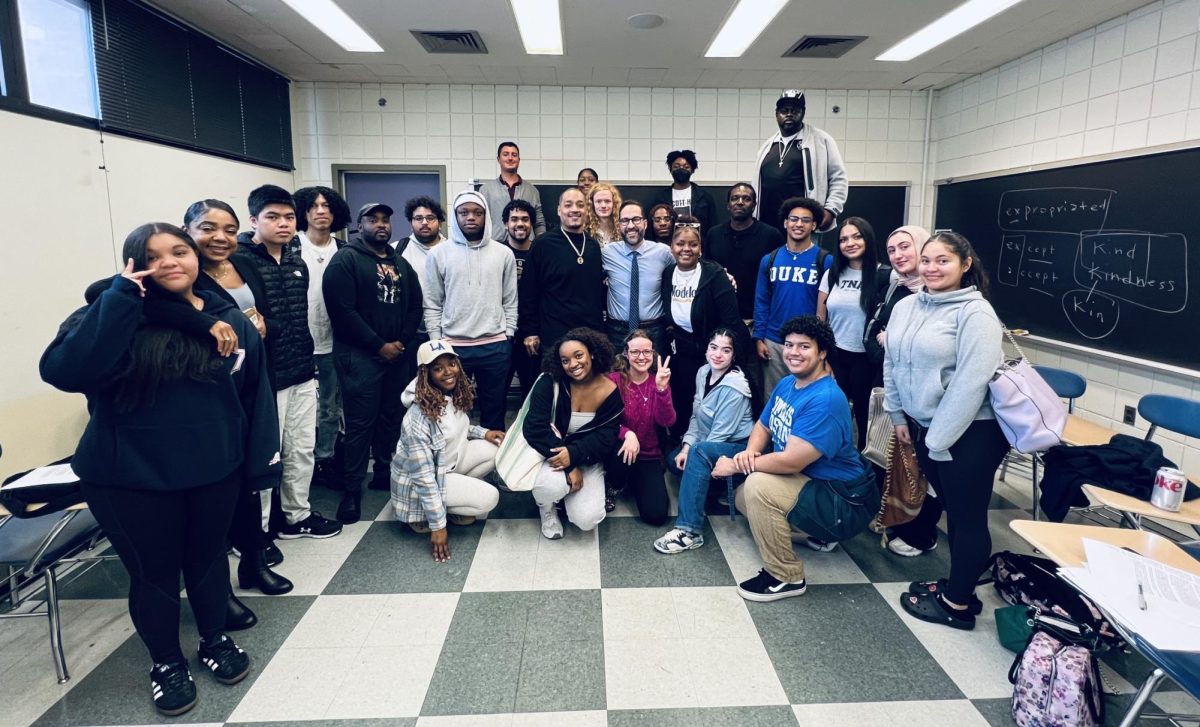
Certain classrooms stay with us long after the semester ends, and certain teachers leave behind more than syllabi and assignments — they leave ways of seeing the world.
As a graduate of UMass Boston, one class in particular remains vivid in my memory: a post-colonial literature course taught by Keith Jones in the Africana studies department.
Recently, I revisited the notes I took during that semester. What struck me most was that they were not simply notes about literature, but about how to understand the world. Reading them now, many of those lessons feel almost prophetic. Concepts we discussed in that classroom — colonial power, racial capitalism, and the politics of representation — no longer appear as distant intellectual debates, but as living realities shaping the world around us today. That course did more than introduce ideas; it prepared me to interpret the turbulence of the present moment with historical clarity.
The psychiatrist and anti-colonial thinker Frantz Fanon once wrote that he felt “overdetermined from without” by the stories and histories imposed upon him. That insight resonated deeply with many of the conversations we had in Jones’ classroom, where we explored how identities and histories are shaped within larger systems of power.
Jones’ classroom was never a place where students passively absorbed information. It was a space where ideas were interrogated and assumptions were challenged. His teaching asked us to confront the historical forces that shape modern life — colonialism, cultural imperialism, and the narratives that sustain them.
We discussed how colonial invasion is not simply an event of the past, but an ongoing structure that continues to shape societies. We explored how representation becomes a site of struggle for oppressed peoples asserting their humanity and subjectivity. These were not abstract theories confined to books; they were intellectual tools that allowed students to think critically about history, politics and culture.
What made Jones’ teaching especially powerful was its deeply humanistic orientation. He did not treat students as passive recipients of knowledge but as participants in an ongoing intellectual conversation about the world. The classroom became a space where we were encouraged to ask difficult questions: What does freedom mean? How are our identities shaped by history? What structures continue to shape our lives today?
For many students, including myself, these conversations were transformative. Education in that space was not merely about accumulating information — it was about cultivating intellectual responsibility.
As the scholar Antonio Gramsci wrote, we must maintain “pessimism of the intellect and optimism of the will.” Dr. Jones’s pedagogy embodied that balance. He encouraged us to confront difficult truths about history while believing that understanding them could empower us to build a more just future.
Similarly, cultural critic Bell Hooks described education as “the practice of freedom” — a process through which students learn to think critically and imagine new possibilities for themselves and the world. In Jones’ classroom, education felt precisely like freedom.
Universities are complex institutions governed by administrative structures and bureaucratic processes, but those structures should never eclipse the very people who give universities their life. Academic institutions cannot function merely as bureaucratic machines when their true vitality comes from educators who cultivate thought, courage and humanity in their students.
Professors like Dr. Jones are the living pulse of a university — a pulse of life, truth and undying commitment to the intellectual and moral development of their students.
In an era of rapid global change, war and socio-economic plight, education must do more than prepare students for careers. It must prepare them to navigate complex historical realities and participate responsibly in shaping the future. That kind of preparation requires educators who challenge students intellectually while affirming their humanity.
When universities lose educators like Jones, they risk losing the very pulse that gives their mission life.