
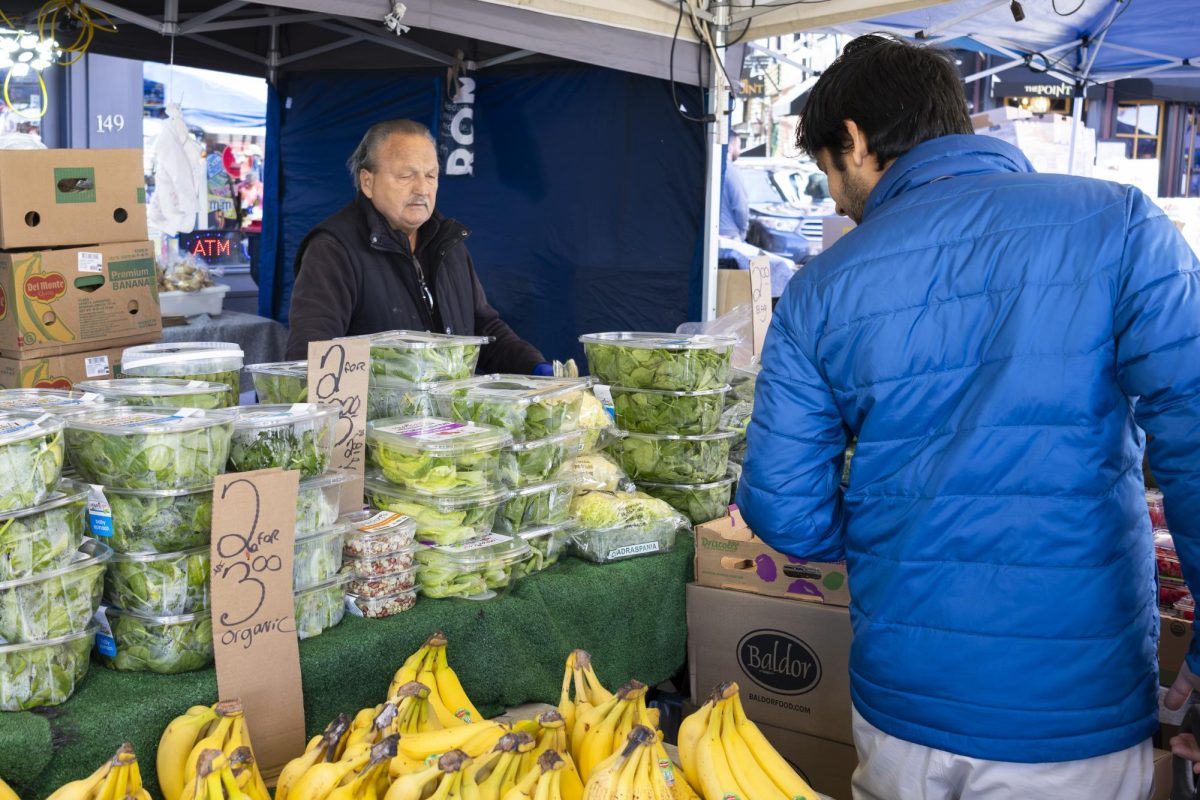
As temperatures begin to rise and Boston shakes off the last of winter, farmers market season is slowly coming back to life. Whether you are looking for the best deals, locally grown fruits and vegetables or just an excuse to spend time outside, here are five farmers markets worth checking out this spring.
Located in the Boston Public Market at 100 Hanover Street, Haymarket is Boston’s oldest farmers market. It runs on Fridays and Saturdays year-round, from dawn until dusk. Haymarket has been operating for more than 200 years and remains one of the most affordable places to buy produce in the city.
Unlike traditional farmers markets, Haymarket vendors often sell wholesale produce, which is why prices are significantly lower than grocery stores. Fruits, vegetables and seafood will often be sold in bulk, so it’s best to go in with a plan.
While it does not operate like a standard farmers market, Haymarket’s affordability and energy make it a staple of Boston’s food scene.
A bit further outside the city, Natick Farmers Market is a strong option for those looking for a more traditional, community-focused experience. The market is open every Saturday from 9 a.m. to 1 p.m.
Natick’s market brings together local farms and small businesses, offering fresh produce, meat, eggs and prepared foods. Many vendors also sell specialty items like honey, flowers, jams and baked goods, making it easy to do a full grocery run or pick up something for the week.
Located right outside South Station, the Dewey Square Farmers Market is one of the most convenient options for commuters and students alike. The market runs from May 15 through Nov. 20 on Tuesdays and Thursdays from 11:30 a.m. to 6:30 p.m., making it an easy stop during a lunch break or on the way home.
Dewey Square features a wide variety of local vendors offering fresh fruits and vegetables, baked goods and dairy products. Its central location and consistent schedule help make it one of the most reliable markets in the city during the warmer months.
Located in the middle of one of Cambridge’s busiest innovation hubs, the Kendall Square Farmers Market feels more like a weekday pop-up than a traditional market. Open Thursdays from May 7 to Oct. 15, the market usually runs from around 12-6 p.m.
Alongside fresh produce and baked goods, the standout here is the variety of prepared foods. Food trucks and vendors often serve globally inspired dishes, from grain bowls to fresh sandwiches, making it easy to grab a full meal rather than just groceries. It is especially popular with office workers and students who want an alternative to chain restaurants.
The Central Square Farmers Market offers a more neighborhood-driven experience, with a layout that encourages browsing and conversation rather than quick stops. The market is open from May 18 to Nov. 23, held every Monday from 12-6 p.m.
What sets Central Square apart is its emphasis on small-scale vendors and handmade goods. In addition to fruits and vegetables, you are likely to find fresh-cut flowers, locally made sauces and unique baked items that change week to week. The selection tends to feel more curated and less routine, which makes each visit a little different.
Beyond the food itself, farmers markets offer something that grocery stores cannot: a direct connection to the people growing and making what you buy. In a region where the growing season is relatively short, these markets play an important role in supporting local farms and small businesses.
Each of these markets also accept SNAP benefits, with many offering matching programs that help stretch what shoppers can spend. That accessibility makes it easier for more people to take part in shopping local, not just those who can afford specialty grocery stores.
As the spring season gets underway, farmers markets offer a simple way to get outside, support local communities and bring fresher food into your routine without overthinking it.
