
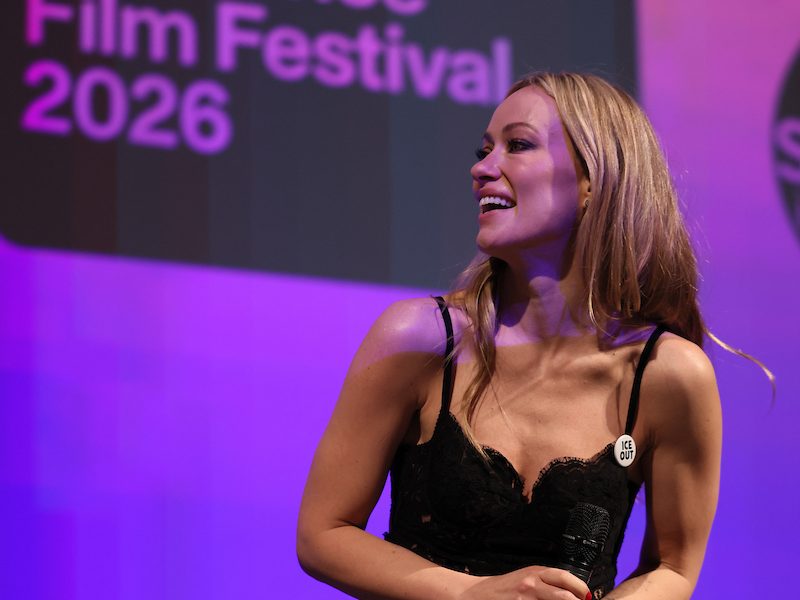
More often than not, million-dollar blockbusters dominate the box office, packed with flashing lights and chaos to keep us entertained. Whether it’s constant anxiety-inducing action or intense emotional turmoil, we, as audience members, go to the movies for a visceral feeling evoked by high-stakes scenarios.
A24’s “The Invite,” unlike most top-grossing adventure films, relies on a different kind of suspense: drama built on conversation and micro-expressions.
The film follows a married couple, Angela and Joe, who are constantly at odds with each other. Played by Seth Rogan, Joe comes home from work to find his wife, played by the film’s director Olivia Wilde, scrambling to prepare their house for guests. To Joe’s dismay, they’ll be hosting the bizarre couple upstairs, played by Penelope Cruz and Edward Norton, responsible for the noise that keeps them up at inconvenient hours at night.
A deceptively simple setup, Wilde uses a confined domestic setting — the couple’s apartment — to gradually intensify the emotional pressure between characters. She doesn’t use the conventional tools many filmmakers rely on to maintain tension, so there’s no dramatic action or any location change; instead, “performance becomes the action,” as Wilde explains.
Wilde highlights the importance of “micro-moments” and expressions throughout the editing process: facial expressions, awkward silences, glances between characters and subtle interactions with props build more suspense than what the characters are actually saying. Much of the emotion is revealed through subtext rather than being directly stated.
“It’s about stripping everything down so that the tension and movement come purely from conversation, rather than cutting between time or locations,” said Wilde.
Non-verbal moments create a rhythm within the film, allowing tension to naturally build as conversations become increasingly uncomfortable. “It gave me a huge range of material to work with in editing. These micro-moments, sometimes even micro-aggressions, became a kind of visual language,” said Wilde, “It almost felt like composing music. It was incredibly fun.”
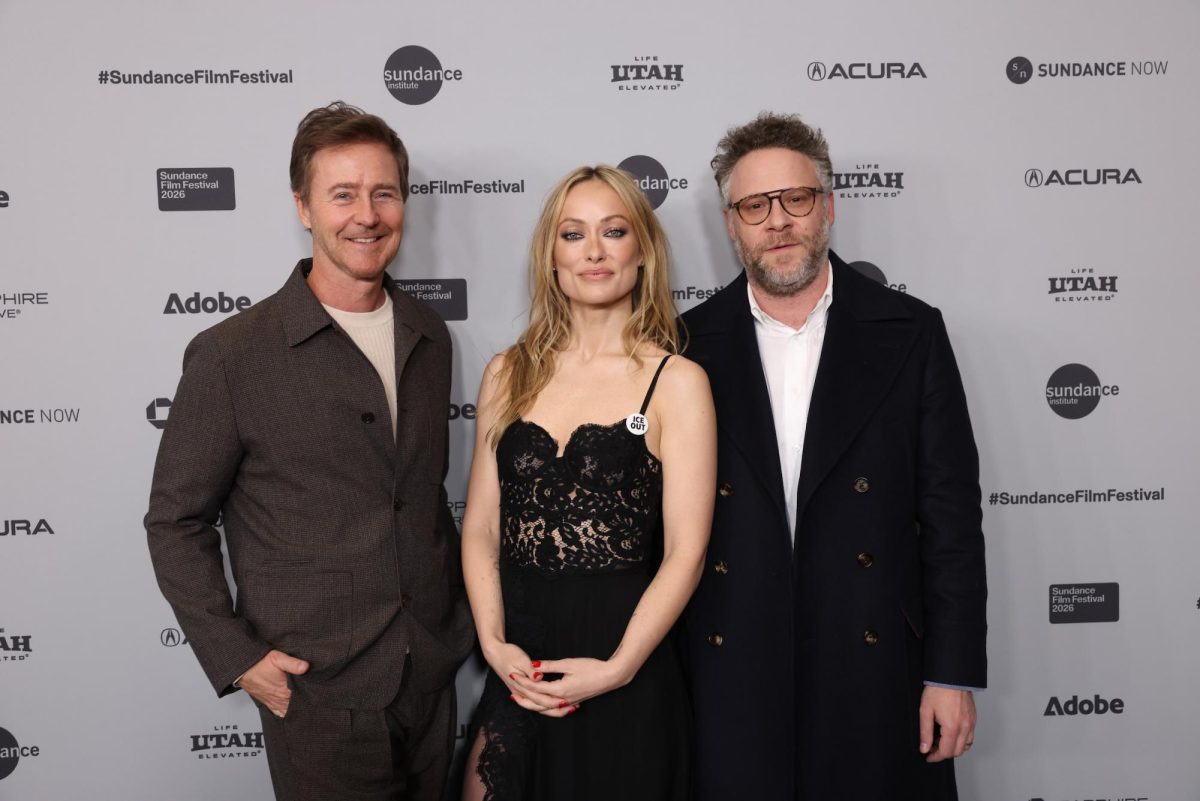
Both the characters and the audience are forced to sit with discomfort in this confined setting. Having originally filmed flashback sequences, Wilde realized that the film needed to remain trapped within the apartment’s emotional immediacy.
“I think audiences are more patient than filmmakers sometimes assume,” she said, “People can sit with silence and tension. You have a captive audience willing to go through that emotional journey, from humor to vulnerability, without relief.”
Refusing to abandon the tension through visual distraction or scene changes makes the film a more theatrical experience where silences are just as, if not more, revealing than dialogue.
Further heightening its realism, “The Invite” was revealed to have been shot in chronological order, allowing relationships and tension to naturally evolve. Improvisation was encouraged, and much of the authenticity was brought to life by overlapping dialogue, creating conversations that feel messy, real and unscripted. “It shows that they [Angela and Joe] are not really listening to each other; they exist in the same space but in completely different worlds,” said Wilde.
Some of the most effective moments in “The Invite” came from spontaneous discoveries on set: genuine reactions captured during filming and small improvisational details deepening the story’s emotional realism.
Ultimately, “The Invite” proves that spectacle is not a requirement in creating tension and captivating an audience. Wilde transforms a standard evening between two couples into an intense examination of communication, vulnerability, and an on-the-rocks relationship through confinement, performance and emotionally loaded dialogue.