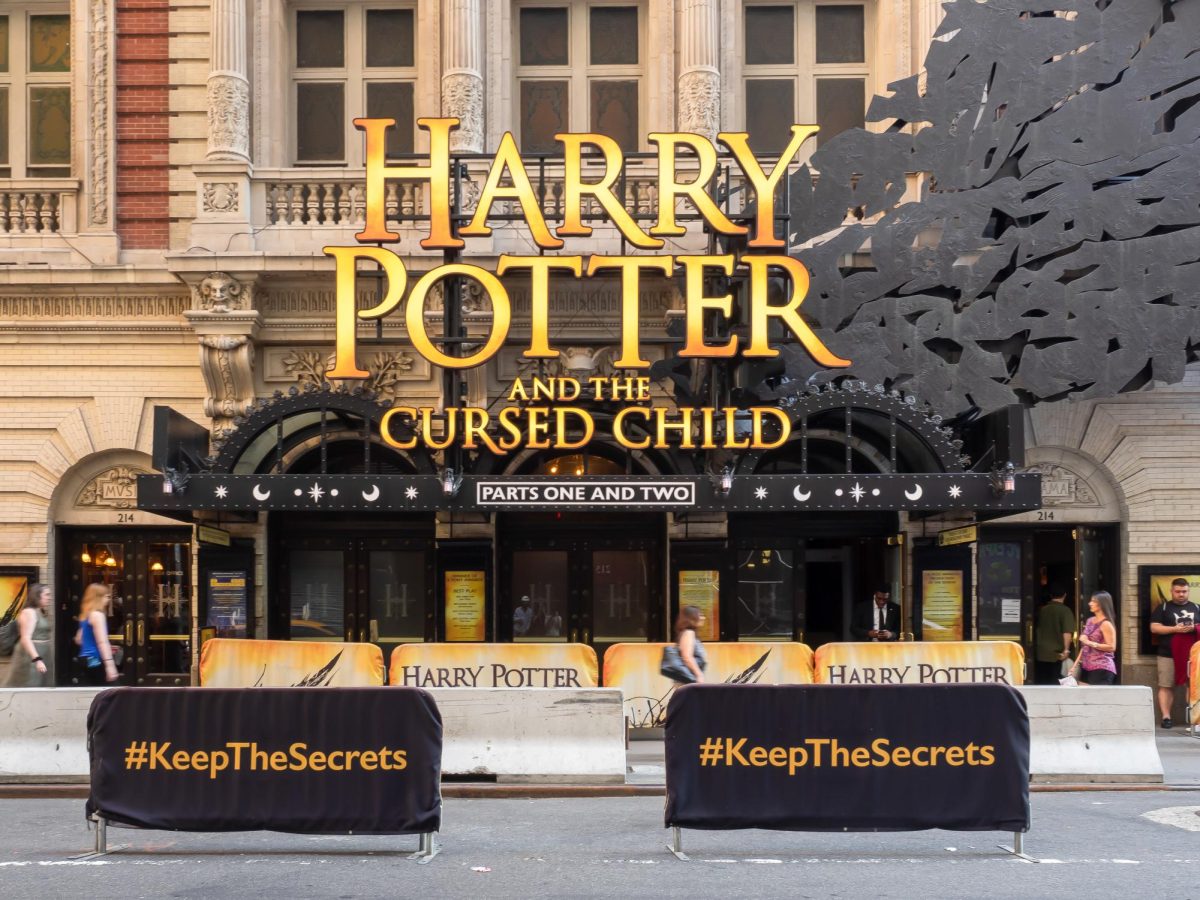
The Emerson Colonial Theatre is hosting a run of “Harry Potter and the Cursed Child,” a sequel to the original series of seven “Harry Potter” books by J. K. Rowling, from Nov. 9 until Dec. 20. Two performances, on Nov. 22 and Dec. 11, will have American Sign Language interpreters, with an additional show on Nov. 19 providing audio descriptions for the visually impaired.
For UMass Boston students with sensory impairments, finding events or exhibitions with accommodations can be difficult. Morgan Cates, Deputy General Manager at the Colonial, oversees the theater’s accessible programming.
“Those of us who work in presenting theater need to understand that our audience base has a variety of needs,” he said. “We need to do everything we can to make our spaces as available as possible to everyone who wants to enjoy them.”
ASL performances are produced in collaboration with directors of artistic sign language. DASLs are often people who are deaf themselves, and have a performing arts background. The ASL performances of the play have three interpreters, who analyze and translate the play into artistic sign language, and rehearse for about a month in advance. During the actual performance, the interpreters stand and sign near deaf audience members.
The performance with audio description, designed for blind or low vision people, involves a live describer who puts together their own script after having seen the show more than once. Audience members can then wear headphones and listen to the description during the performance.
Cost is a factor in determining how many shows in a run can be accessible to people with sensory issues. Hannah Huynh, assistant director at the Ross Center for Disability Services and a former stage manager, explained that accessible performances are, at least for the time being, special occasions rather than regular opportunities, characterizing the work involved in organizing ASL and audio description performances as “prohibitively expensive.”
However, as technology has developed, offering certain forms of accessible programming has become cheaper. The Colonial Theatre received certification from KultureCity, a nonprofit dedicated to accessibility for people with sensory issues. They train theater employees to be sensory-friendly, offering audience members at certain events sensory-friendly bags with fidget toys, headphones and ID badges. With the use of the GalaPro app, closed captioning is now much cheaper and more widespread than it used to be.
“We are seeing a pretty significant increase in the number of people with sensory issues who are being incorporated,” Cates said. “It will continue to become more and more of a priority.”
Though accessibility in the arts is improving, Cates said there is always more to be done. The Colonial Theatre is 125 years old this year, and it was not built with disabled people in mind. Providing services for people with more than one condition or disability, such as an audience member who is both deaf and blind, remains an issue.
But Cates said awareness of these issues is growing. “It is already so much more a part of every conversation,” he said.
Being sensory-friendly involves addressing other disabilities beyond hearing and vision impairment. Huynh has seen stage performances for neurodivergent people that leave the house lights on, use music at a lower volume and incorporate statements from actors before the performance explaining that the play is not real.
As maintaining adequate income is a common issue for disabled people, she hopes that there will be funding for those who might otherwise not be able to afford to see accessible entertainment. Massachusetts’ Universal Access Program provides recreation for people with disabilities, and the National Endowment for the Arts has an Office of Civil Rights and Equal Employment with resources for enabling accessibility in the arts.
But there may be more that can be done to make entertainment affordable for people with disabilities. Said Huynh, “I would love to see subsidized tickets.”