Social media has become a regular part of our daily lives, and because of its prevalence, widespread coverage of events happening all over the world is now constantly accessible.
While abundant coverage of the world’s suffering can spread awareness, social media’s constant short-form content can result in the opposite of its intended purpose: a desensitization to human suffering.
Repeated exposure to violence and suffering through social media can subtract from its shock value. Shock and horror should conjure up empathetic responses to human suffering, but when shock and horror are replaced by indifference and tolerance, steps for change won’t be taken and suffering will only continue.
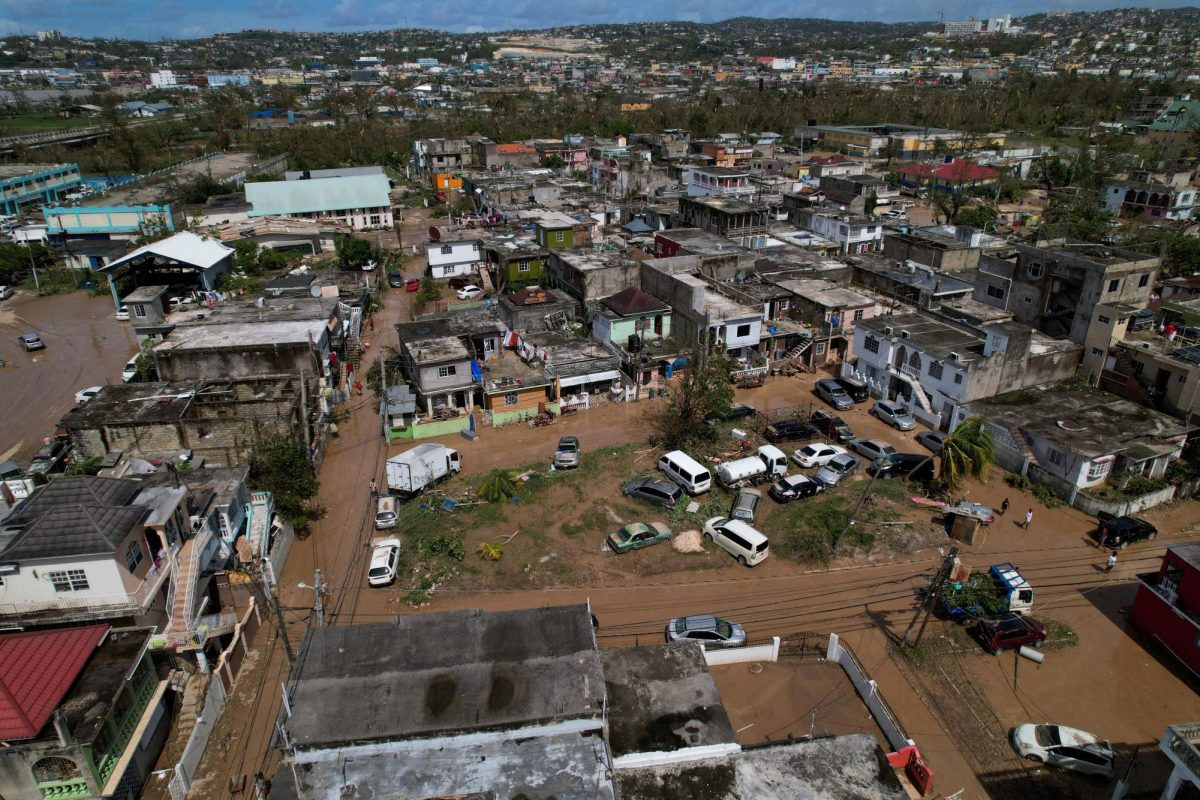
Take the aftermath of Hurricane Melissa in Jamaica for example. As the strongest hurricane to ever hit the country, Melissa has left Jamaica in ruins. Homes and towns have been destroyed, personal belongings have been lost forever, mud is caked onto every surface and many are still without power.
The damage Jamaica has faced is devastating, but I feel social media does a poor job of framing that devastation properly. Videos of Jamaicans laughing, making jokes or playing around in the hurricane aftermath have surfaced and become popular. They are quite humorous and show how the people of Jamaica can be resilient. But resilience does not excuse indifference from the rest of the world.
When the suffering of others is constantly flashed before our eyes, we begin to think it is normal, especially when it comes to people of color. Social media’s current presentation of human suffering does not frame it in a way that brings forth any sense of urgency or action. Instead, it encourages you to scroll to the next video its algorithm provides and to avoid any feelings that make you uncomfortable.
When we see videos of human suffering, we pass it off as just another daily occurrence. Just another child starving in a far away African country, an Islander who fell victim to a climate disaster, or an Arab person who lost their family to a genocide. Social media promotes the idea that atrocities are supposed to happen to certain people and that it will always be that way.
Social media presents human suffering as a sort of fantasy. It is something that is far away and something that we will never see in person. Genocides, climate disasters, mass starvation and modern-day slavery are but mythical horrors of far away lands, never to affect us in the slightest.
Social media puts a veil over the fact that all those obscene and violent events are real and are happening to real people. Modern-day slavery is happening in Dubai. Genocides are plaguing the people of Palestine, Sudan and Congo. Climate disasters have destroyed Jamaicans’ livelihoods. Just because it’s happening over and over again on your phone does not mean it is not occurring in real life.
Empathy takes too much of your time and can prevent you from just scrolling to the next video. Social media platforms do not want you to linger. They want you to move on to the next video so you stay on their app as long as possible. Do not give in. Resist their enticing promise of entertainment through scrolling.
Next time you see a video of someone going through a tragic or violent event online, sit with it. Talk about it and think about the consequences of their pain and suffering. Do not let social media desensitize and prevent us from having real, empathetic and human responses.