
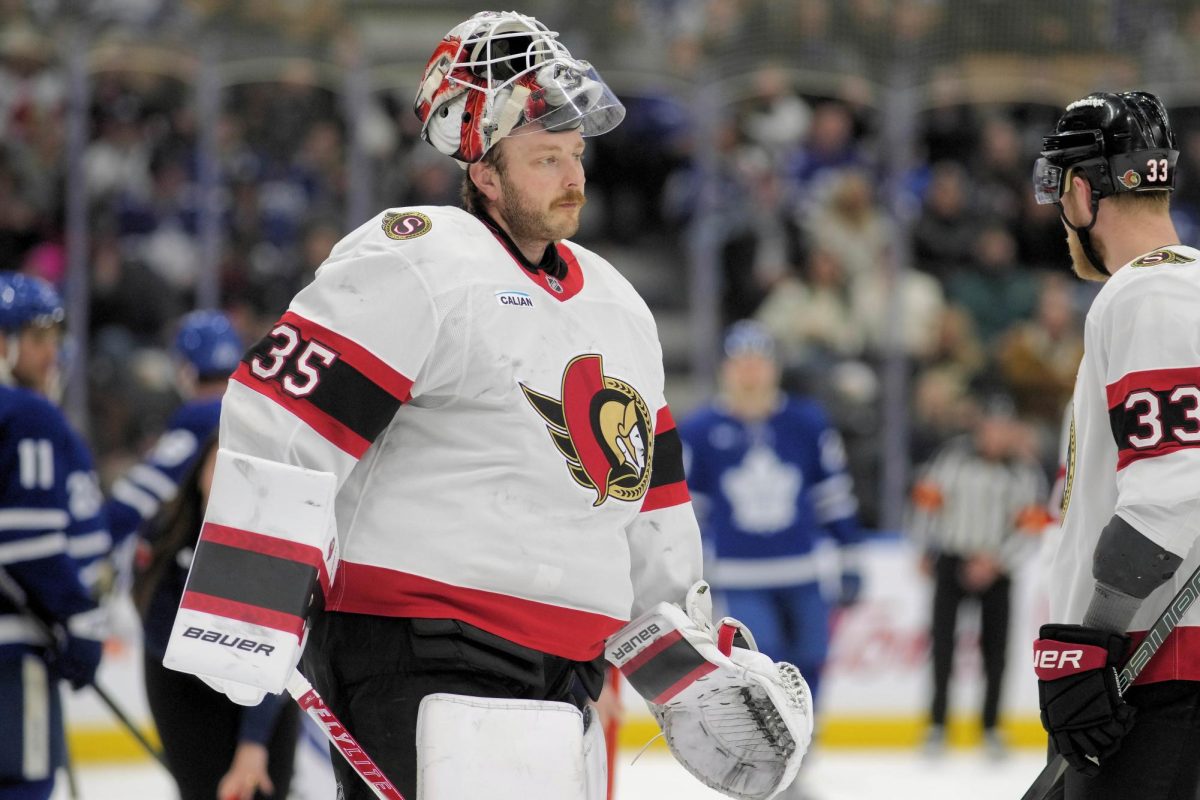
You never know what someone may be going through in their personal life, whether they are a famous athlete or the person sitting next to you on the train.
Ottawa Senators goalie Linus Ullmark stepped away from hockey Dec. 28, taking a leave of absence from the team for what was described at the time as personal reasons. With little information shared publicly, speculation quickly filled the void. One rumor began circulating on social media alleging Ullmark had left the team because he was having an affair with one of his teammate’s wives, claiming the situation had created tension inside the locker room.
Despite being completely unsubstantiated, the rumor gained enough traction that Senators players and team management felt compelled to address it publicly.
Brady Tkachuk, the Senators team captain, responded to the rumors with utter disgust.
“I don’t think anybody’s pretty happy about a narrative being spread like that,” Tkachuk said Jan. 10. Tkachuk added that people have a right to critique a hockey player’s on-ice performance but anything personal should be left alone, adding “it’s embarrassing that it got to the point that it did.”
Senators President of Hockey Operations and General Manager Steve Staois condemned the lack of respect for Ullmark’s privacy in a public statement made Jan. 8.
“Linus is away from our team for personal reasons and he has the entire organization’s support. We asked that people respect his privacy, but clearly that request was not heard by the lowest forms of trolls and sick people who scour the internet,” Staois said.
The menacing rumors had no evidence, no sourcing and no regard for the human being at the center of them. Yet they were shared and treated as plausible simply because they existed online. That reality raises an uncomfortable question: Why do people feel entitled to invent and spread rumors about athletes they do not know, even when those claims are entirely false?
When Ullmark finally addressed the situation, he offered a blunt answer.
In an interview Jan. 20, Ullmark said it happens simply because “people love to just f—ing drag you down.”
“They just want to find a reason to bring you down to their level. They don’t care,” Ullmark added.
Ullmark returned to the Senators Jan. 12 and clarified that his leave of absence was due to serious mental health challenges he had been experiencing related to hockey.
Social media doesn’t just let people make baseless claims — it practically rewards it.
Outrage spreads faster than facts, and the more absurd or scandalous a story, the more attention it gets. Because people don’t have to confront their targets face to face, there’s no real consequence. The system itself encourages this kind of behavior, turning rumor and speculation into a form of entertainment at someone else’s expense.
At the end of the day, Ullmark’s situation is a reminder that the people we follow, cheer for or criticize online are human beings first. They have struggles, private challenges and vulnerabilities that we will likely never see. Instead of feeling tempted to invent drama or spread rumors, it’s far more important to respect someone’s privacy and resist speculating about what might be going wrong.
