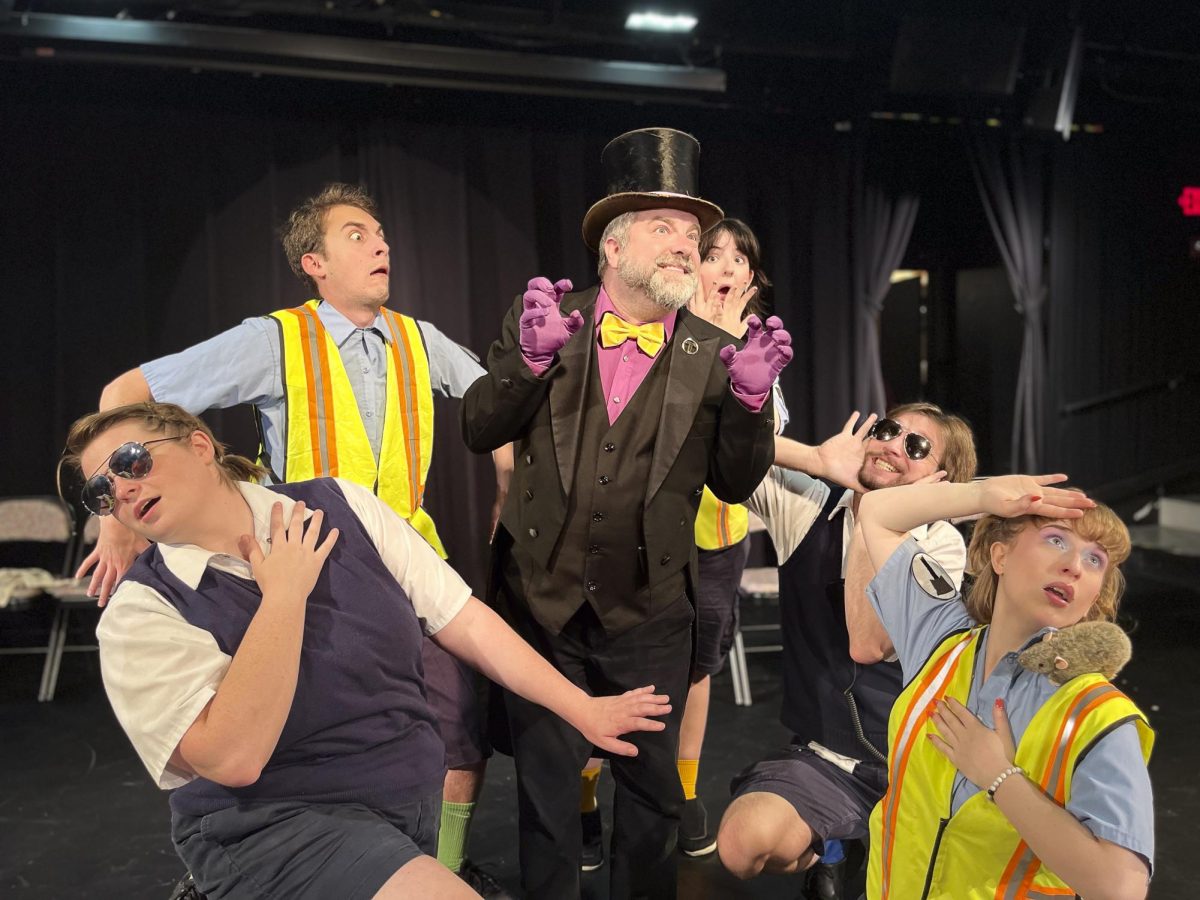
Infinite Rotary Productions will continue its run of “T: An MBTA Musical,” a show about navigating the MBTA, a potential source of frustration for many in the Boston area, from Feb. 20 to Mar. 1 at the Rockwell Theater in Somerville, under the direction of Tyler Rosati.
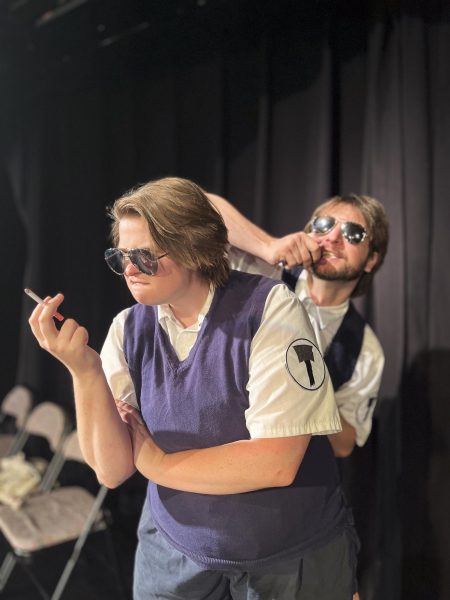
The show completed its previous run Sunday at the BCA Plaza Theater in Boston. It is loosely inspired by “The Wizard of Oz,” with three heroes — Alice, John and Michelle — finding a magic map that will lead them to the MBTA’s “secret headquarters,” facing a set of villains and MBTA minions on their journey. Their journey revolves around dismantling the T from within, according to Ken Crossman, who plays a character known only as Frat Boy.
Crossman, who grew up in Needham, has a lifetime of experience with the MBTA. He mentioned that it’s easy to feel slighted by disastrous lateness and endless delays. “It can feel very personal, whether you’re missing a meeting or a date,” he said.
Inspired in part by a Green Line collision in 2009, composer and lyricist Mel Carubia approached script writer and original director Mike Manship about writing a show of some kind about the MBTA. That, to Carubia’s knowledge, didn’t yet exist. Manship and Carubia put on the first iteration of the show at the now-closed ImprovBoston in 2011, moving a revamped version to the Oberon, also now closed, a year later.
In the intervening years, the MBTA’s issues have continued to make headlines. In 2022, a car on the Orange Line caught fire in Somerville, with one passenger jumping out of the window into the Mystic River.
Carubia’s own experiences with the T at the time of the show’s inception were more typical of frequent riders living in the Boston area. They spent many hours on the crowded B branch of the Green Line waiting for it to pull through its many stops, watching frat bros do pull-ups on the bars inside the train on their way to a poorly paid job. They didn’t have a choice; they didn’t have a car.
 “People love the T, but they also hate the T,” Carubia said. “It’s one of the things in Boston that unites us.”
As the show is specific to the MBTA, it has not played outside New England, according to producer Cassandra West, though she said people from outside Greater Boston have enjoyed it. The fact that New York has its own public transport musical, “In Transit,” may be an indicator that Boston isn’t the only city whose public transport system is worthy of song and dance numbers. Still, “T’s” appeal is definitely local.
“This show is really for and about Boston,” West said.
One of the villains the heroes encounter is the General Manager of the Month, played by Pearl Scott. She clarified that the people involved in “T’s” production don’t actually believe that the MBTA has secret headquarters or minions.
“We’re not blaming the T,” she said. “The show is obviously farcical.”
Four different sources used the word “cathartic” independently of each other when discussing their work on the musical. West, originally from suburban Connecticut, associates Boston-area transit with 20-minute car rides that take an hour and a half on public transportation. Turning everyday exhaustion into a musical “made this show a lot of fun to be a part of,” she said.
Music director Ben Cuba sees the show as a kind of celebration of everyone’s frustration with the T. He sees that frustration as an integral part of living in the Boston area, assuming you use the T with any regularity.
“The references that we have embody the city wholly,” he said. “The T could be perfect, and the show would still be timely.”
The real-life MBTA is aware of the show’s existence, with production offering discounted tickets to MBTA employees. Current general manager Phillip Eng has seen it and has treated fellow employees to tickets, according to Carubia. When it debuted, then-general manager and current Massachusetts Port Authority CEO Richard Davey came and asked for pictures with the cast. Frank Oglesby, whose voice is used for different announcements throughout the MBTA system, agreed to join live performances Feb. 7 and 21. According to West, MBTA employees experience transit-related frustration as acutely as anyone else.
She said, “They’re also able to go, ‘That’s me, that’s my experience.’”
Correction: A previous version of this article misstated the last name of co-writer Mike Manship.