
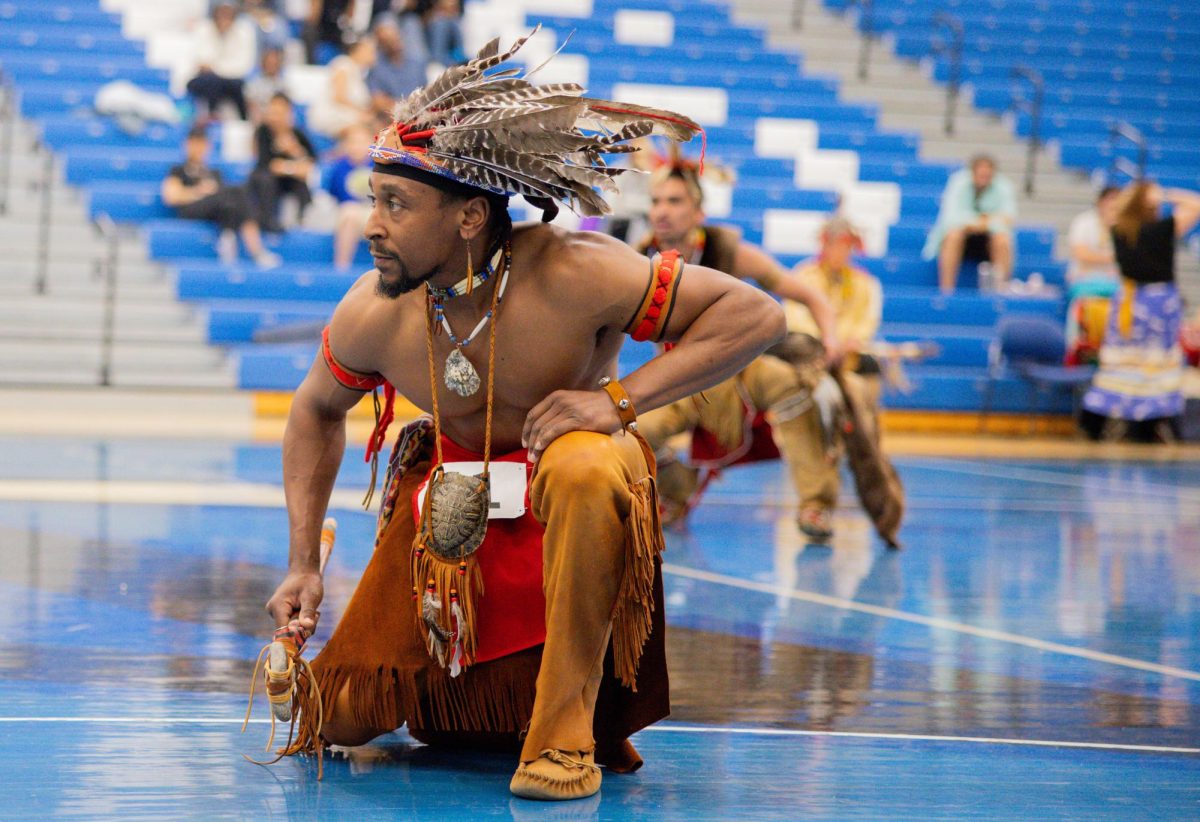
In the Clark Athletic Center May 3, the Native and Indigenous Student Association will hold a powwow to celebrate community, socialize and bring awareness to issues that are important to the community. Vendors will open at 10:30 a.m., and grand entry is at 12 p.m.
The powwow is free to everyone, and will include Native dancers and singers, food, art and other goods. There will be around 50 dancers in their own regalia, and more than 20 vendors showcasing their creativity and culture. It is organized completely by UMass Boston Native and Indigenous students, faculty and alumni.
NISA Student Advisor Jamie Morrison sees this powwow as a chance for people to come together and support the Native and Indigenous community on campus, as well as the broader community.
“The Powwow in this form is a social event, and we want people to have a good time,” Morrison said. “But with the understanding that hopefully the event leads to meaningful connections that will continue beyond the event itself.”
Native and Indigenous history is not something many are well or properly educated on, despite being a crucial part of United States history. Organizers hope the event will provide education for visitors and shed light on issues that are often overlooked.
One of these issues include Native people who are battling addiction, or are close to somebody who is, which will be honored by a Stomp Dance, intended to give participants strength and support to “Stomp Out Addiction.”
The program will also highlight the ongoing crisis of missing and murdered Indigenous women, a persistent issue that advocates argue remains underreported. According to the National Institute of Justice, more than four in five Native American and Alaska Native women have experienced violence in their lifetime, with many cases of missing persons going underreported or misclassified.
Advocates say raising awareness at community events like powwows is one way to push these ideas into public conversation and call attention to gaps in resources, reporting and protection.
These elements are a core part of the powwow’s purpose, not just additions to the program. Organizers aim to create space for both cultural celebration and awareness, encouraging attendees to engage with traditions while recognizing the ongoing challenges facing Native communities, particularly in regions where these histories and issues are often underrepresented.
Planning for the event started in the fall, with weekly meetings held since January. For an event of this size, significant outreach and coordination with the local Native community is required, along with strong support and communication from the campus community.
“It’s very rewarding working with your community throughout the process,” Morrison said. “It’s a good feeling knowing you put together a quality event for the people, and you take all the feedback to improve the event the following year.”
The hope for the powwow is to establish it as an annual event, something that the university and community can look forward to every year. While there are a few established powwows in the region, many are held at Ivy League schools and are not easily accessible to the broader community. NISA aims to become part of that tradition and establish the event as a staple on the Boston powwow calendar.
“I think for those of us presently here, we want to make sure that we provide a strong foundation for those coming after us,” Morrison said.
