
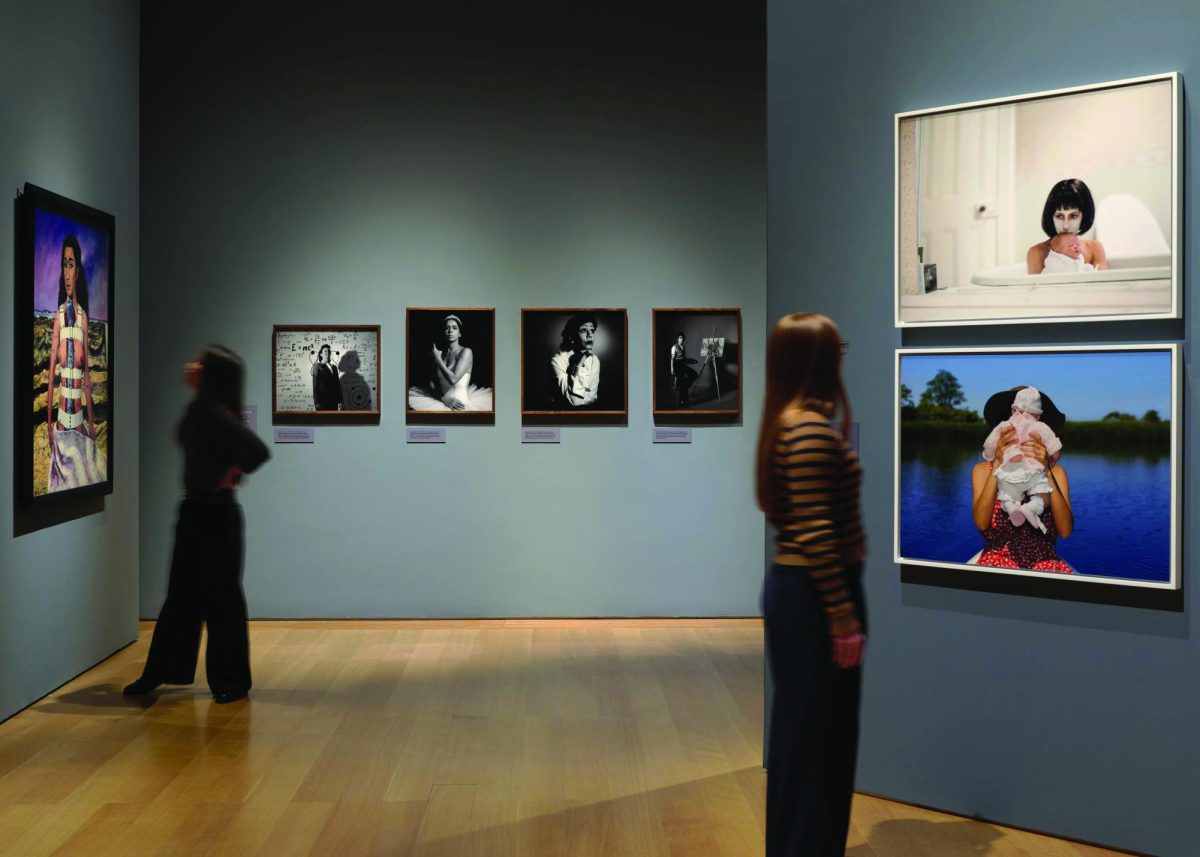
Art museums often present themselves as open to everyone, but in practice they can feel exclusionary to those who don’t match the typical image of a museumgoer. That distance shows up in subtle ways, from pricing to atmosphere, and it can make the space feel out of reach. Limited accessibility increases prestige. When visiting museums is framed as an upper-class pastime, it becomes harder for students and others to see themselves as part of that audience.
Across Boston, that barrier often starts with cost. The Museum of Fine Arts charges $30 for general admission. The Institute of Contemporary Art is $20, and the Isabella Stewart Gardner Museum is $22. While the Harvard Art Museums offer free admission, most major institutions come with a price tag that can make casual visits feel like a luxury.
Many colleges in the area, including UMass Boston, offer discounted or free museum access to students. But those benefits are not always easy to find. Information about reduced admission is often buried on school websites or limited to flyers that students may never see.
“I didn’t even know we had free admissions besides to the MFA, and that’s only because a professor of mine told me,” said Linnea Carmona-Swisher, a senior at UMass Boston. “I feel like they don’t advertise the discounted rates at all.”
Even in spaces where cost is not a barrier, other forms of distance remain. The Harvard Art Museums are free to the public, but they are not entirely removed from the patterns of traditional museum culture. On a recent Wednesday afternoon, the galleries were populated largely by older visitors with only a handful of younger people, most of whom appeared to be there for academic purposes.
That trend reflects broader patterns across the museum world. Studies from national arts organizations have consistently found that museum audiences tend to skew older, wealthier and more formally educated, raising ongoing questions about who these spaces are really reaching.
Museums themselves have acknowledged this gap. On its website, the Museum of Fine Arts, Boston states, “We are committed to ensuring that all visitors see themselves reflected at the MFA.” Across the city, institutions have introduced discounted tickets, free admission days and expanded programming in an effort to broaden their audience.
At the Harvard Art Museums, those efforts have included a shift to free admission in June 2022 and an increase in public programming designed to draw in new visitors. Daron Manoogian, the museum’s director of communications, said the institution is aware of these perceptions and has worked to counter them. Past surveys found that many people in the Boston area were unsure whether the museum was open to all.
“We’ve done a lot to break down those misperceptions,” Manoogian said. “It’s easier for us to reach Harvard students, but we want students from other universities to know that they’re welcome here.”
The museum has also introduced monthly Thursday night events that keep the space open later and create a more social environment with music and opportunities to gather.
“We intentionally made that event to be primarily a social event,” Manoogian said. “We get a lot of first-time visitors, sometimes people who have never been to any museum before.”
Still, Manoogian said the biggest barrier for students is not always financial.
“I think museums have been perceived as places that are only comfortable to those who are knowledgeable about art,” he said. “That’s not a good model for museums to be relevant today.”
That perception can shape how students engage with museums, or whether or not they go at all. Labels filled with academic language, quiet gallery spaces and an expectation of prior knowledge can make the experience feel intimidating rather than inviting.
Museums have started to respond by rethinking how they present their collections. At Harvard, that includes more accessible gallery language and interactive elements designed to engage visitors who may not have an art history background.
But access is not just about what happens inside the museum. It also depends on whether students know they are invited in the first place. For many, the issue is a combination of cost, awareness and comfort. A $30 ticket can be enough to keep someone from walking through the door. So can the assumption that the space is not meant for them.
Boston’s museums remain some of the city’s most prominent cultural institutions. For students, especially those new to the area, they offer a way to engage with the city beyond the classroom. But until access is not only offered but clearly communicated and genuinely felt, those spaces may continue to feel just out of reach.
