
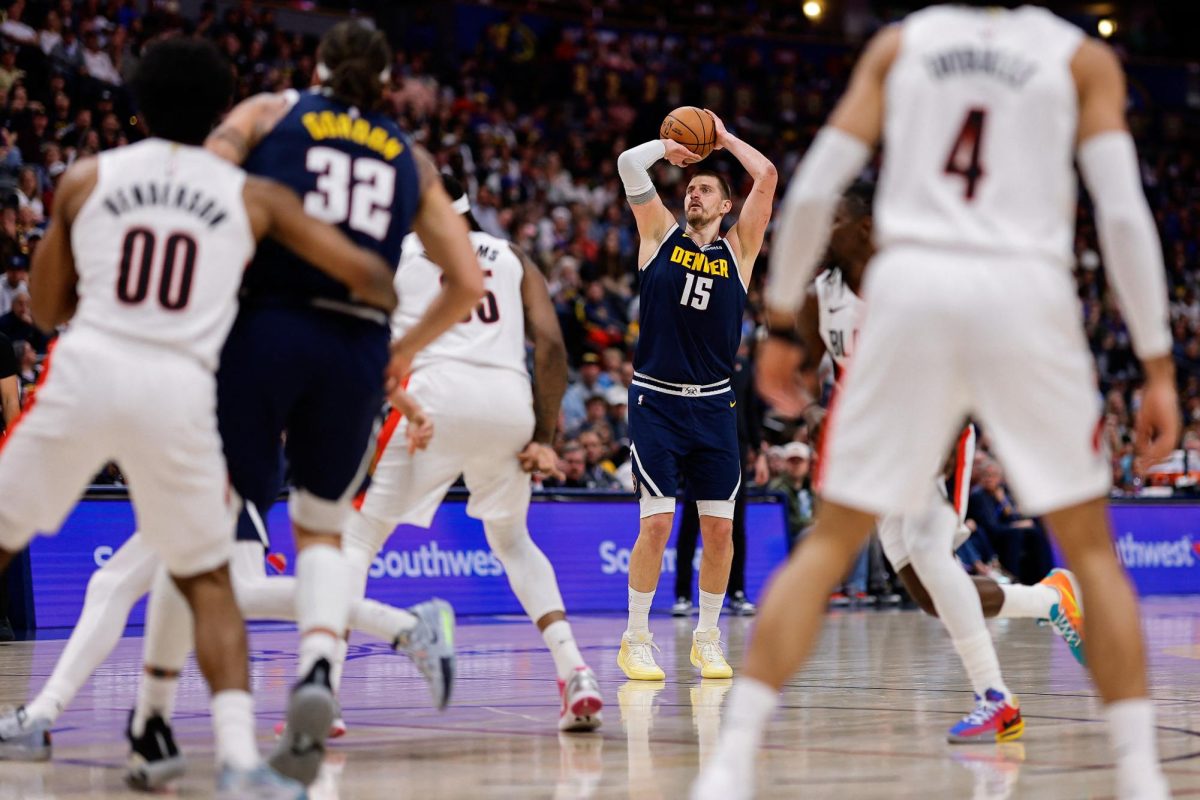
The Minnesota Timberwolves held a comfortable 14-point lead as the final seconds ticked off the clock in Game 4 of their first-round playoff series against the Denver Nuggets April 25, set to take a 3-1 series lead. With 2.1 seconds left and the game all but decided, Timberwolves’ forward Jaden McDaniels received the ball in the front court and drove in for an uncontested layup, extending a lead Minnesota did not necessarily need.
Nuggets superstar Nikola Jokic took offense to McDaniels’ actions, sprinting the length of the court to shove him and exchange what were presumably unkind words. What followed was a brief scuffle between the two teams that quickly became the main storyline in what had otherwise been an entertaining game.
With a comfortable lead, it is customary for the winning team to simply dribble out the remaining seconds and let the clock expire. McDaniels broke what is viewed as an unwritten rule in basketball, continuing to make a play against a non-existent defense and players ready to hit the showers. To Jokic, and many others who subscribe to the concept of unwritten rules in sports, his actions were seen as unsportsmanlike and disrespectful.
Maybe McDaniels did not have to take the layup — there was no need to pad the lead, nor any real strategic motive behind it. But it is a bit outlandish to presume his actions were inherently disrespectful or harmful. Nobody was around him, so there was no risk of injury. It was a simple dribble into a layup, not some emphatic dunk followed by taunts. He was just playing basketball while there was still time left on the clock.
It was another incident where the desire to adhere to a fabled standard of sportsmanship, dictated by so-called “unwritten rules,” led to unnecessary drama. It feels as though we falsely equate following these unwritten rules with what it actually means to be a good sport. Sportsmanship is about respecting the game, your opponents and your teammates. Playing within the rules should not be condemned as misconduct or a violation of the sport’s integrity.
More than anything, the importance of “unwritten rules” seems to surface most when one side feels wronged — typically when it is already losing. They rarely come into focus when a team is comfortably ahead, but rather when frustration begins to set in. If the issue is an opponent adding to a lead in the final moments, the greater concern should be how the game reached that point in the first place.
And when that frustration boils over into confrontation, the claim of defending sportsmanship begins to ring hollow. Visible outbursts and retaliation project something closer to being a sore loser, which is a far greater breach of the sportsmanship these unwritten rules claim to uphold.
At that point, the conversation shifts from sportsmanship to how to handle disappointment. Much of Jokic’s frustration likely stemmed from losing a pivotal game in the playoffs, and it is worth noting the tension that has developed between Denver and Minnesota after several years of hard-fought postseason battles. But targeting McDaniels because his actions were viewed as an obstruction of loosely defined guidelines is ultimately misplaced and exposes the flawed nature of what we consider the “right” way to play the game.
