
For many Puerto Rican children, their first Party de Marquesina doesn’t happen in a club or a concert hall, but inside a garage. Bass and strings jounce off the pavement, merging into a mix of reggaetón, underground tracks and family favorites.
For those who share a similar upbringing to Bad Bunny, the Super Bowl halftime performance felt like returning to a childhood neighborhood. Nail salons and barbershops lined cobblestone streets while vendors sold fried plátanos, a beloved staple. Dancers wore straw hats and plaid overalls, paying homage to the island’s agricultural roots.
At the center of it all, Bad Bunny stood atop a pickup truck, zigzagging through the crowd — picking up neighbors, abuelas and abuelos, and jíbaros — and gathering the community together in celebration at the casita.
Simply put, a Party de Marquesina is a Puerto Rican garage party — but that does not account for its generational legacy. The home becomes a backdrop for all kinds of social gatherings, from family reunions to neighborhood junctions and even wedding ceremonies.
It was never just a place, but where the magic of life happens.
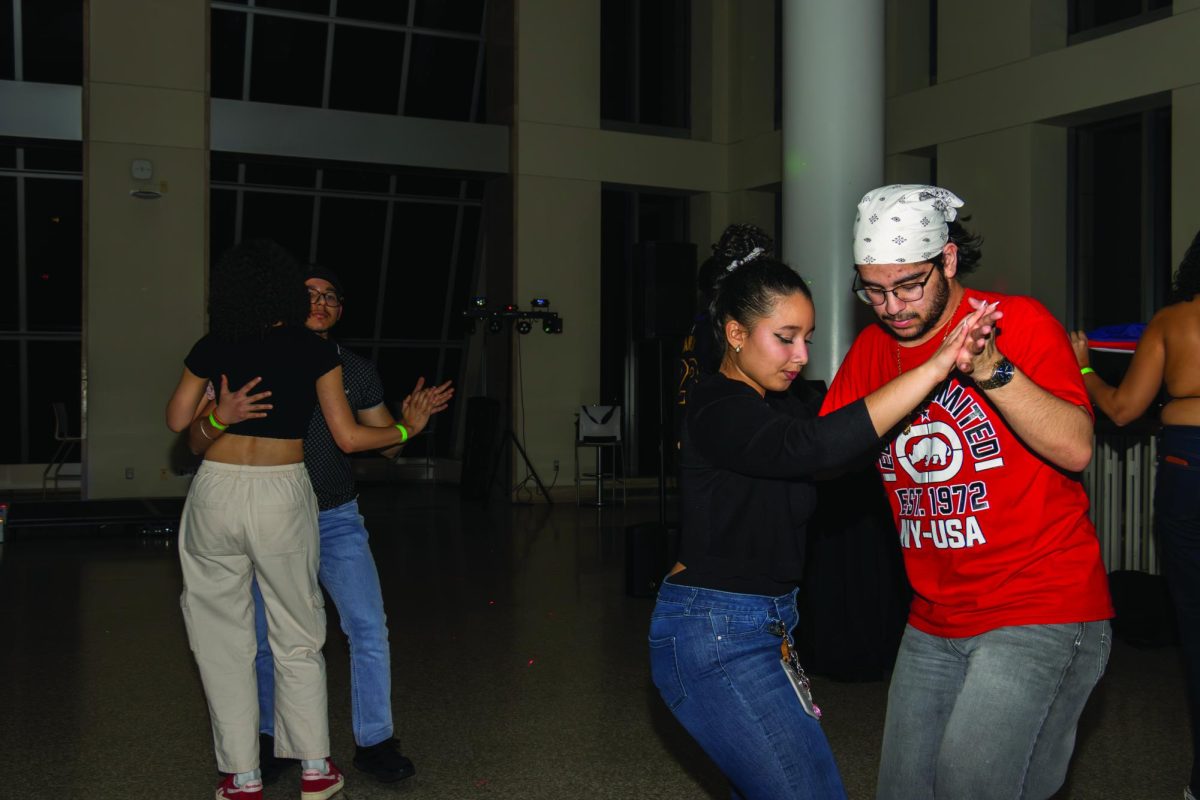
Bringing the casita to wherever life takes them, the Puerto Rican Student Association welcomed students to come together, dance and celebrate at Party de Marquesina April 9. With DJ Fuerto spinning reggaetón classics, a sense of life and energy filled the otherwise quiet night at the Campus Terrace in the Campus Center.
There are no strict rules to these parties, but you can expect one thing: they are L.O.U.D. — Life, Open, Used music tapes, and Dance floors. The sound is turned up not only for volume, but also taking up space in a place faraway from cultural roots.
Homemade fruit punch and snacks helped rejuvenate attendees, but even more powerful was the way the music and dance brought a sense of spiritual freedom and release.
You cannot fully understand reggaetón without recognizing perreo, a dance style characterized by rhythmic hip movements, often performed with a partner. It emerged alongside reggaetón in Puerto Rico in the 1990s, tracing back to Afro-Caribbean dance traditions shaped by the African diaspora and the unspoken legacies of slavery and colonization.
Perreo, once criticized as “obscene,” was targeted by government crusades in Puerto Rico and faced the erasure of its Afro-Caribbean roots. In the early 2000s, efforts to sanitize the genre took place, attempting to replace its Blackness with more Eurocentric imagery.
In response, perreo combativo emerged as a form of social advocacy within LGBTQ+ youth communities and was embraced by queer, trans, and nonbinary young people as a way “to create a sensuous and liberated communal space that generated political power.”
The dance style became a major cultural movement that challenged the nationwide homophobia and colonialism that sought to rewrite its roots in mainstream media. Today, perreo is now integral to reggaetón music and has significantly impacted global pop and club dance styles.
The legacy of Party de Marquesina reflects the resilience of a seedling. Wherever it takes root — whether on the UMass Boston campus or on a global stage like the Super Bowl — it grows into a community that feels like home, even when far away from its origins.
