
Let yourself be bored — our future depends on it
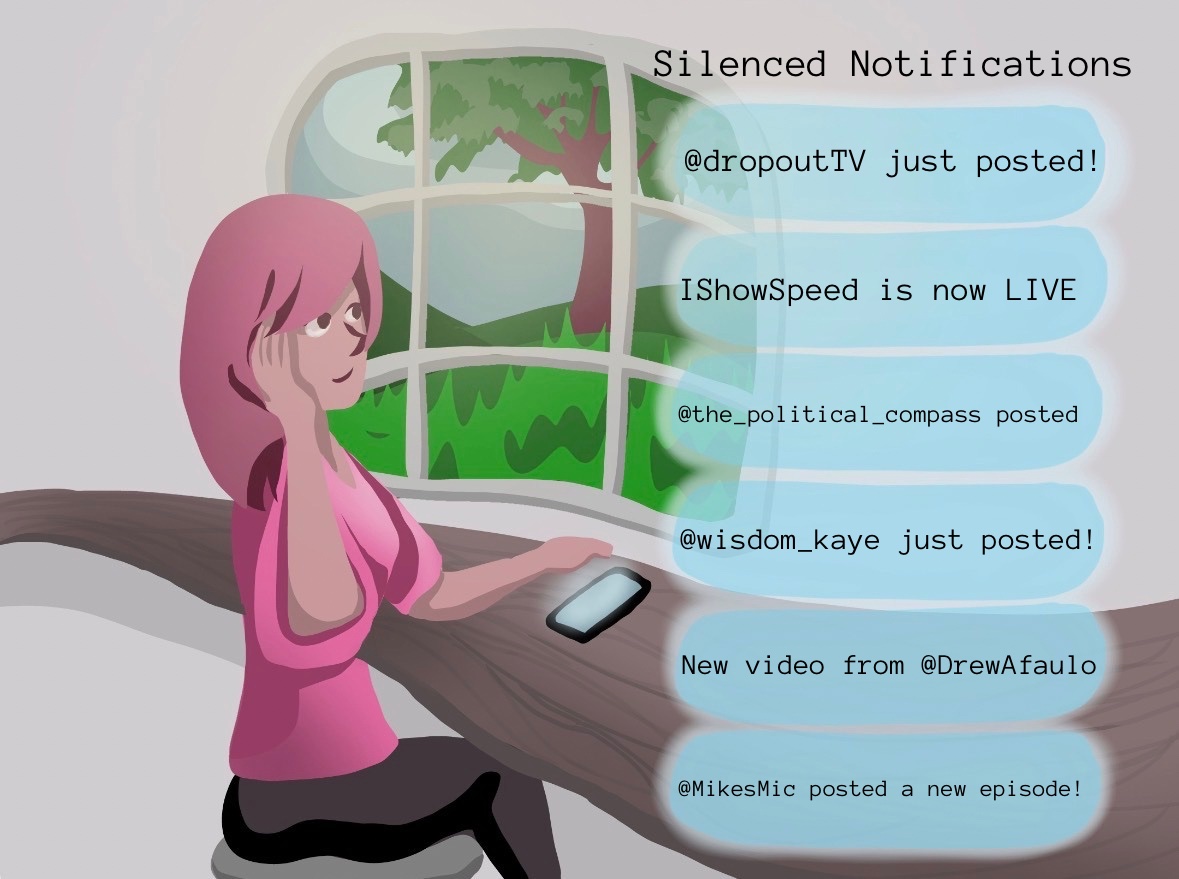
My roommate’s brother came up from Virginia for her graduation recently. He was sitting with us in our living room, and we were chatting, surfing through streaming services, trying to decide on a movie to watch together. My roommate was trying to get him to watch what she wanted, and he finally relented, saying, “It doesn’t matter. I’m only gonna half-watch it, anyways.”
I asked what he meant, and he said, “I can’t watch a movie without going on my phone. I need Reels or something in the background.” At the look on my face he added, “It’s bad, I know. I just can’t.”
“We’re cooked,” I said. Two words to brush it off, to ensure he felt no judgement. Two words to sum up the existential plight of a generation, to offer a laugh instead of forcing silent reflection, silence that might involve reckoning with what being “cooked” truly means: for us, for the world, and for our future in it.
The hegemonic form of media consumption has become short-form video content. Conceived by the now-extinct social media app Vine and brought to bloom by the explosion of Tik Tok, short-form video content has consumed the media landscape whole and spat out something irrevocably altered. All the social media giants — Facebook, Instagram, Youtube and so on — have co-opted this form and implemented it in their own platforms to maintain relevance.
The rise of short-form video content has changed more than just the media landscape. It has changed the way our brains function, the way we interact with others, and alongside the rise of AI, contributed to stagnation in creative endeavors and intellectual pursuits. Simple tasks become Sisyphean. Challenging, worthwhile projects become impossibilities.
This is not normal. It is also not some coincidental, natural evolution of media. It is an intentionally manufactured change to the way people consume media. Behind it lurks the culprit always responsible in capitalist society: profit. Algorithms designed to sink their claws into your brain and keep you there at all costs; the longer you stay, the more profit can be mined from your sustained attention. Short-form video content is entertaining, ceaselessly stimulating, infinitely various, and ultimately catastrophic to the people consuming it. It’s a triple entendre for the ruling class: it keeps the masses entertained and thus placated; it generates profit at an incredulous rate; and it wears down the critical faculties of the electorate, numbs them to the political maelstrom currently threatening to teeter us over the brink.
So how can we resist?
We are meant to stew in boredom. In silence. To let our thoughts come and go, observing, cascading down the stream of consciousness, reflecting on our experiences, brainstorming how best to focus what fleeting time we have on the things most important to us.
We’re meant to enjoy the company of others. To be present, attentive to the conversation at hand. That can mean catching up over a cup of coffee, musing on the things each of us has been up to over a long weekend, or having serious discussions about events transpiring in Boston and across the world. Conversation is natural to us, a core tenet of our humanity, and an imperative function of building community — something all of us strive for at UMass Boston.
Never before in our history have we had such an abundance of distractions so close at hand. Grab the little box of pixels off your nightstand, tap the glass a few times, and the entire world opens up before you. This is a wonderful thing in many ways: the boundless wealth of our collected knowledge, and billions of other souls, within reach while you sprawl cozily in bed. And yet that ease of access to anything **opens the door to a floodgate of distractions.
Take one commute to campus. Ride the T. Sit on the campus shuttle. You will see the truth which your smartphone has conditioned you into believing is normal: everyone engrossed in their phone, the world about them discarded to oblivion.
It has become a compulsion; an addiction; a sickness. The surge of dopamine which spikes in our brains every time we open social media and scroll through our feed, or watch video after video on our For You Page, worms its way into our brains and alters the way we experience everything. How can we enjoy worthwhile tasks that are arduous, that take significant effort, when our brains are constantly rewarded for engaging in activities that require nothing from us? The answer cannot be to relent and give in to mindless consumption. We must find ways to resist, to ensure — as students, and as young adults finding our way in the wider world — that we maintain our ability to engage critically with the world, and to create and consume in meaningful, impactful ways.
We are constantly challenging ourselves at UMass Boston. Excelling in college, or even scraping by, is no easy feat. Each day we show up on campus, each class we walk into and sit down ready to learn, is another challenge, another moment in which we must be prepared to absorb and engage with and apply new information and ideas. We are constantly expressing the ideas which teem restlessly in our own minds, filtering those raw concepts into organized and coherents thoughts, through essays and exams and other assignments. Even in between class periods, as we lounge on campus with friends and classmates, we talk about these incredibly complex concepts that we’re trying to wrap our minds around. These are all symptoms of a healthy, flourishing student body, emblematic of the kind of environment that should be pursued by all students and universities.
This way of living is dependent upon our brains and their ability to function in a healthy way, not addled by dopamine receptors that have been fried from constant overstimulation. We must be able to do things that don’t constantly hammer us with pleasure and stimulation; we must be able to think critically, to maintain our attention for extended periods of time. It is that or relent. That or give in to the technocrats who are counting on your mental faculties to decline and decompose. Whose plans are dependent upon your distraction, your complacency?
Go for a walk and forget to bring your phone. Wake up, open the blinds to see the morning sun, and when you reach over to your nightstand, let your hand pass over the sterile box and snatch up a book. Stare at the ceiling, at the sky. Notice the world around you, the people in the streets, walking, talking, hustling about their day, sticking their noses in their phones.
Take those moments to reflect. Ruminate on the last conversation you had, positive or negative. Think about the ways you can make an impact in your community, how you can take the first leap toward being the person you aspire to become. What can you do to get that boulder rolling? One breath at a time. Mountains are scaled with individual steps.
We do not always have to self-analyze or be striving for some monumental goal. We can simply observe: notice the roots shearing up through the concrete, the new building going up day by day, the construction workers standing around, chatting, laughing, blowing smoke. Observe without expectation, and you will find your mind reflecting naturally on the things most central to your person.
Each moment we abstain from the instant gratification is a moment of resistance. A lifetime of such moments is an existence set in opposition to systems of power that are desperately seeking our attention to monetize, our brains to desensitize, our souls to hollow out. As those moments compound we may just find ourselves reflecting on things previously left untouched. New avenues of thought sprouting and blooming, leading us down untrodden roads. Observing those around us, realizing how deep this world of social media has sunk its claws into us, how pervasive and all-encompassing its power over us has become.
As those moments compound, we can feel good about ourselves, about the lives we’re living. We can take pleasure and pride in the ways we engage with the world. And we can marvel at how simple it can be to resist the late-stage capitalist hellscape we’ve found ourselves in. It doesn’t take much — just a little boredom.
