


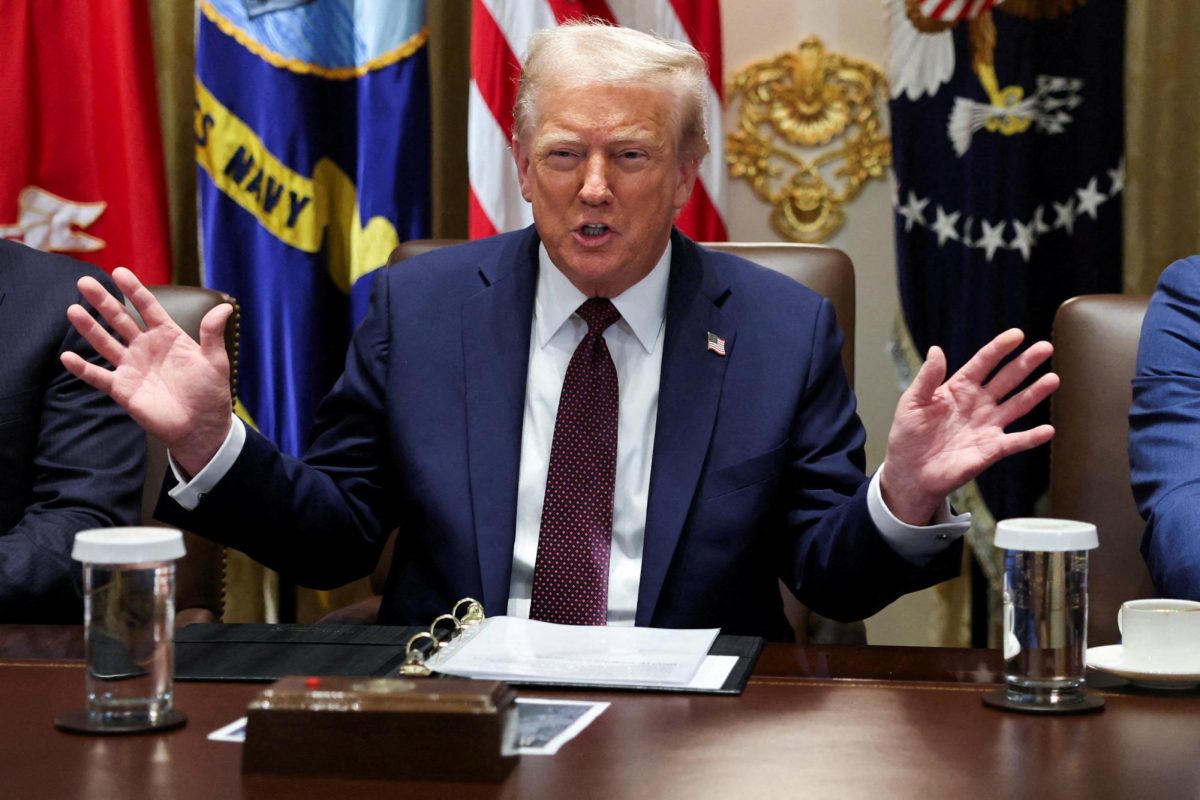
President Donald Trump made a post on Truth Social Aug. 18 stating that he wishes to eliminate voting machines and mail-in ballots in the United States.
He pledged in his post to sign an executive order to “bring HONESTY” to the 2026 midterm elections.
“I am going to lead a movement to get rid of MAIL-IN BALLOTS, and also, while we’re at it, Highly ‘Inaccurate,’ Very Expensive, and Seriously Controversial VOTING MACHINES,” Trump wrote, “which cost ten times more than accurate and sophisticated watermark paper, which is faster and leaves NO DOUBT, at the end of the evening, as to who WON and who LOST the election.”
Speaking further on the issue, White House press secretary Karoline Leavitt said Aug. 19 that “Republicans generally and the president generally want to make it easier for Americans to vote and harder for people to cheat in our elections.” She also said that the White House would have “discussions” with state legislatures and Congress.
Massachusetts offered early voting during the 2024 presidential election, which allowed for more flexibility for residents — including students — who lived in the state but were unable to get to the polls on Election Day. About 34% of voters in the Massachusetts general election voted by mail, according to Boston.com — a total of 1.2 million ballots were cast by mail, and a further 600,000 ballots were cast early in-person. In the fall of 2024, roughly 15.4% of UMass Boston’s undergraduate student body came from out of the state of Massachusetts; these students must request an absentee ballot in order to vote in their home state, according to Vote.gov.
In his post, Trump called mail-in voting a “scam” that gave an unfair advantage to the Democratic Party. According to data from Tufts’ Center for Information & Research on Civic Learning and Engagement, 45% of youth aged 18-29 in Massachusetts cast a ballot in the 2024 presidential election. 61% of this group voted for Harris, compared to 36% for Donald Trump.
NPR political correspondent Ashley Lopez said in an Aug. 18 interview that many challenges could interfere with Trump’s wishes to implement the new rules by the 2026 midterms.
“Primary elections are not that far away,” Lopez said. “Election administrators are already prepping and budgeting for those elections. So to eliminate mail voting in particular — which is a way that a third of the electorate has been recently casting their ballots — is tough to imagine. … That’s not even mentioning the time and cost it will take to replace voting machines across the country.”
This would not be the first time Trump’s attempts to change voting procedures in the U.S. have been challenged. He signed an executive order in March that sought to change many existing voting processes, including requiring voters to supply proof of U.S. citizenship before registering to vote. States that didn’t comply with the list of new rules would risk losing federal election-related funding. The order saw major pushback, with 19 states and various civil rights groups filing lawsuits against the Trump administration.
“The U.S. Constitution designates the power to regulate the ‘time, place and manner’ of elections to the states, with the proviso that Congress can step in and override those laws,” Patrick Marley of the Washington Post wrote in March following the executive order. “It gives no specific power to the president to do so. Election experts said that Trump was claiming power he does not have and that lawsuits over the measure were all but guaranteed.”
Eventually, portions of the order being blocked in these 19 states by a federal judge. Lopez believes the newest executive order will likely also face litigation.
“The Constitution is quite clear that the regulation of elections is the power of the states, and only Congress can change that,” she said. “He is not within his rights to tell election officials whether they should allow their voters to cast mail-in ballots or use voting machines.”
