


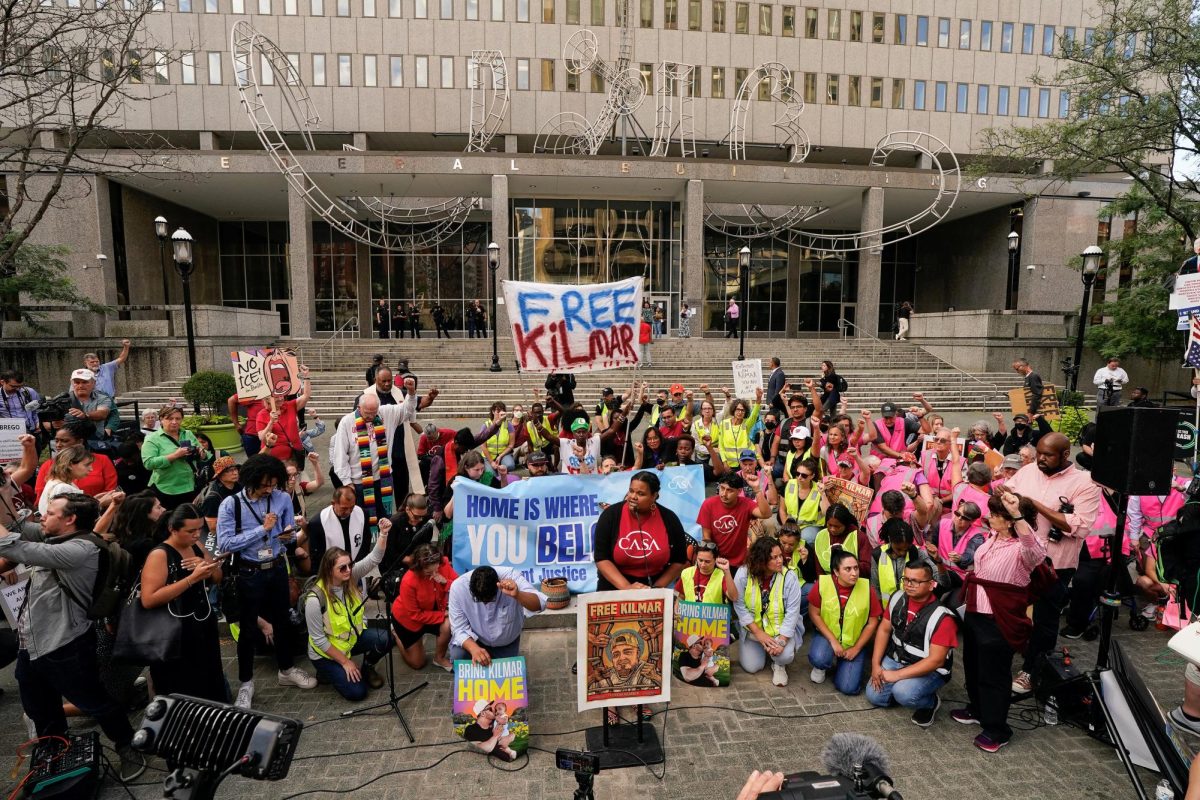
Various changes to immigration policies in the U.S. have left many undocumented students entering the new school year with uncertainty.
Since President Donald Trump’s Jan. 20 inauguration, the Trump administration has toughened the country’s protocol surrounding undocumented immigration. After the Department of Homeland Security rescinded a Biden-era policy that prohibited immigration officers from entering protected areas such as schools and churches, many universities in the Northeast have established that they will not be sharing any information about their students’ immigration statuses.
“This action empowers the brave men and women in CBP and ICE to enforce our immigration laws and catch criminal aliens — including murders and rapists — who have illegally come into our country,” the DHS said in a statement Jan. 21. “Criminals will no longer be able to hide in America’s schools and churches to avoid arrest.”
The plight of international students was further brought to national attention following the detentions of Mahmoud Khalil and Rumeysa Ozturk in March 2025. Khalil, a Columbia University student, was detained March 8 after ICE alleged he falsified information on his green card application and engaged in protests harmful to the country’s foreign policy. Tufts student Ozturk was detained March 25 after her visa was revoked without her knowledge. Both students had been vocal about the genocide in Palestine prior to their detention.
According to the Presidents’ Alliance on Higher Education and Immigration, over 400,000 undocumented students are enrolled in higher education in the United States as of June 2024. Many of these students were protected from deportation under the 2012 policy known as Deferred Action for Childhood Arrivals, which prevented younger undocumented people who arrived prior to 2007 from being deported. DACA recipients, however, are not granted citizenship or legal permanent residency, meaning many students are left in limbo as to whether their education will be threatened in the long-term.
The Trump administration has yet to make any concrete changes to the DACA program, which provides benefits to over 525,000 recipients as of March 31. DHS has recommended recipients self-deport from the United States, and the Department of Education has recently opened investigations into universities that provide scholarships to DACA recipients.
“The U.S. Department of Education’s Office for Civil Rights (OCR) has opened national origin discrimination investigations into the University of Louisville, the University of Nebraska Omaha, the University of Miami, the University of Michigan, and Western Michigan University,” the DOE wrote July 23. “The investigations will determine whether these universities are granting scholarships only for Deferred Action for Childhood Arrivals (DACA) or ‘undocumented’ students, in violation of Title VI of the Civil Rights Act of 1964’s (Title VI) prohibition against national origin discrimination.”
Additionally, the DOE issued a memo July 10 that stated undocumented students were no longer eligible to enroll in G.E.D. or English Language Learning programs, both of which are federally funded. Universities were told to check students’ immigration statuses to “verify the eligibility of participants.” Twenty states, including Massachusetts, as well as the District of Columbia sued the Trump administration over this policy, and the government pushed back the effective date to Sept. 10.
Undocumented students could potentially face significant changes to their safety, finances, and access to educational programs. Currently, UMass Boston automatically considers DACA and undocumented students for first-year and continuing merit scholarships. The Student Immigrant Alliance Club and Immigrant Student Programs offer resources to DACA recipients and undocumented students.
“The University of Massachusetts Boston is the most diverse university in New England and offers a welcoming college community,” the university wrote on its resources page. “We encourage Deferred Action for Childhood Arrivals (DACA) and undocumented students to apply for admission to the university.”
