

With just 25 years left to eliminate or offset all greenhouse gas emissions, the City of Boston’s promise to become carbon-neutral by 2050 is approaching a critical crossroads.
To meet the net-zero target, Boston must dramatically reduce emissions across four major sectors: buildings, energy, transportation and waste. Buildings are the largest contributor, responsible for roughly 70% of all emissions in the city.
According to the Boston Real Estate Times, meeting the target requires retrofitting thousands of homes and commercial spaces, electrifying heating systems, improving insulation and ensuring all new construction meets strict energy efficiency standards. At the same time, Boston is working to expand clean energy through solar power, offshore wind and other renewable sources to move away from fossil fuel-based electricity.
The transportation sector must undergo a massive transformation as well, with a more reliable MBTA service, expanded bike lanes and widespread electric vehicle adoption needed. Waste reduction through composting, recycling and zero-waste programs also remains essential in cutting emissions from landfills and consumption.
Still, significant questions remain about whether change is happening fast enough. Climate advocates warn that if the city does not substantially increase action by 2035, the 2050 deadline may no longer be realistic. Updated policy reports coming in late 2025 will show whether Boston is on track or already falling behind.
UMass Boston has been working to align its own sustainability efforts with Boston’s broader climate goals. Janna Cohen-Rosenthal, the Sustainability and Resiliency Planner in UMass Boston’s facilities administration, said the university emphasizes using the campus as a “living lab,” with the Office of Campus Planning & Sustainability partnering with academic programs so students can work on real sustainability challenges.
In 2024 alone, more than 60 students gained hands-on experience developing project proposals through collaborations with the School for the Environment and the Honors College.
Another major part of the university’s climate strategy is the Energy and Carbon Master Plan, which, according to the university’s Points of Pride in Sustainability and Resiliency for Oct. 2025, “outlines a decarbonization strategy to stop burning onsite fossil fuels, utilize renewable energy, and become a net zero carbon emissions campus.”
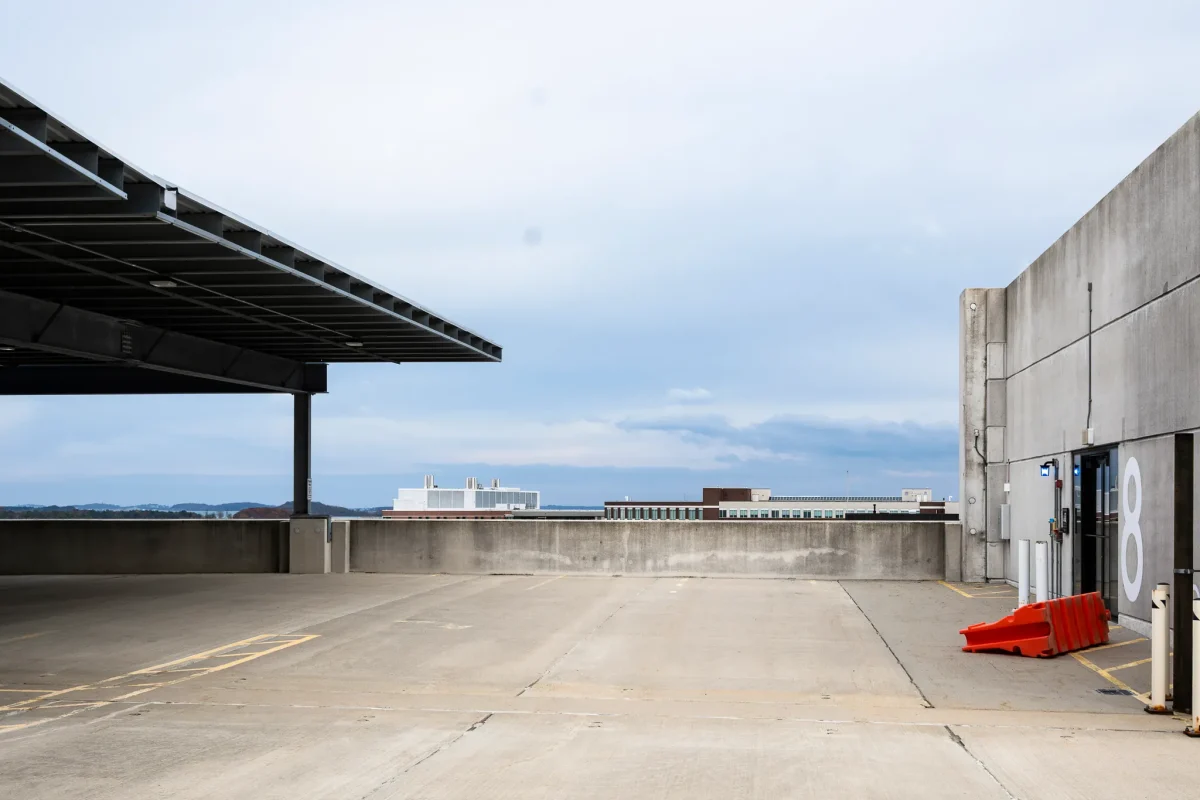
The plan includes expanding zero-emission thermal energy from the ocean and increasing rooftop and garage-based solar energy generation — innovations that could put UMass Boston ahead of many campuses nationwide. Staff describe the ECMP as a long-term transformation that aligns with Boston’s 2050 vision while directly protecting the campus from coastal climate impacts.
Student involvement is also becoming a core part of sustainability culture at UMass Boston, where the “campaign for ‘Sustainable UMass Boston’ brand connects & amplifies activities from research to operations.” Earth Month in April now brings more than 25 events to campus each year, and groups like the Sustainability Club and MASSPIRG provide opportunities for students to get involved in climate action.