

The East Residence Hall’s residential floors reopened to some students Friday, though most students in the blue corridors will not return for the rest of the semester.
The East Residence Hall had been closed since Feb. 9, when a burst pipe caused water damage and required the building’s closure until inspectors approved remediation efforts. The university arranged alternative housing at UMass Amherst’s Charles River Campus in Newton, approximately 40 minutes from UMass Boston.
An email sent Friday to affected students said that those living in the orange and yellow hallways could return immediately, along with blue hallway residents on the 11th and 12th floors — which were unaffected by the flood because they are above the pipe burst on the 10th floor— and some on the lower floors that are nearby elevators and will be unaffected by construction.
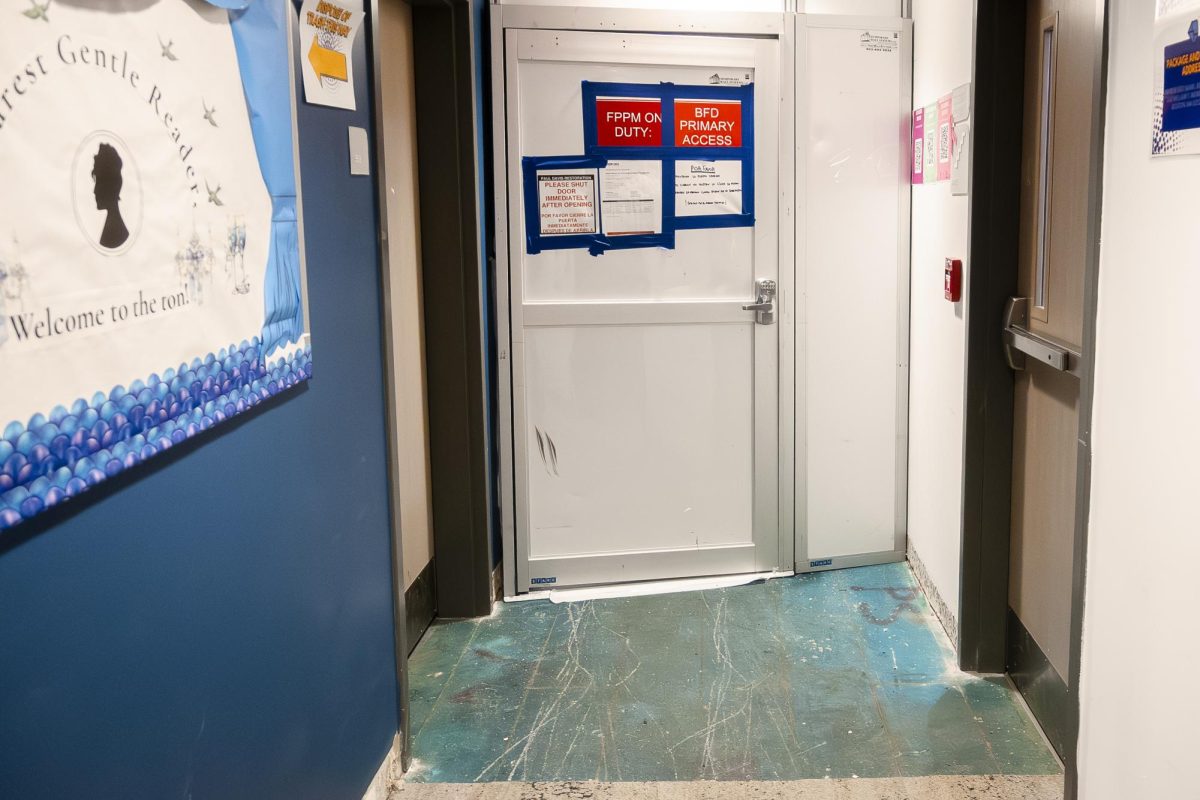
“Active construction areas, where remediation and restoration are underway, are strictly off limits to building residents… Construction walls have been installed in the Blue Zone (floors 2-10) to prevent unauthorized access to these construction areas,” wrote Capstone On-Campus Management, the company that operates the residence halls. Students living in those rooms were given the option to move out Friday or continue storing their belongings in their rooms, according to an email sent to students who cannot return to the building.
“Based on the current stage of construction, inspections, and a clearer understanding of timelines for restoration, we have identified that your room is located within a construction zone,” the email said. “Even though your room did not experience any damage and your belongings have not been impacted by this incident, we must inform you that you will not be able to re-occupy your current room and you will soon be provided a new housing assignment for the remainder of the semester.”
Students who lived in approximately 50 rooms that sustained flood damage moved into dorms at Emerson College last weekend. The university provided those students with moving bins and professional laundry services for wet bedding or clothing.
At Emerson, “UMass Boston students will be housed together on a dedicated floor to maintain community connection and peer support,” the university wrote in a Feb. 19 email. “UMass Boston Residential Life staff, including peer assistants, will be on site, to provide continuity of support, programming, and community engagement throughout the remainder of the semester.”
Residents who cannot move back in immediately will remain in short-term housing at the Charles River Campus or hotels provided by COCM. “We are actively securing housing for the remainder of the semester,” the email said. The company is also extending stays for students staying in hotels.
The building remained closed for nearly three weeks, displacing more than 600 students. Residents were unable to access their belongings until the afternoon of Feb. 11, when officials began allowing residents to return to their rooms with a staff escort. The first-floor Dining Commons also reopened that morning.
Flood remediation efforts began within hours of the pipe burst, but officials said inspectors had to approve repairs to the sprinkler system and the electrical systems before allowing occupancy. Fire department officials also had to approve repairs to one of the building’s stairwells, because it is required as a means of egress in the event of a fire. Meanwhile, remediation crews removed wet carpet, cut away the bottom of walls and placed industrial blowers and heaters in spaces affected by the flood to dry them out and prevent mold growth.
In an email sent Thursday evening to East Hall residents, the university said it is “hopeful that by the end of next week we will… Finalize another longer-term housing partner to provide stable, consolidated housing for remaining displaced students.”
“We understand that “hope” is not the same as confirmation. We will provide definitive details as soon as contracts are executed and inspections are complete,” the university wrote. “Our priority remains safety, stability, and minimizing further disruption.”
