
Stephenson King Jr., a 39-year-old Black man, was shot and killed in Roxbury March 11 by Boston Police Officer Nicolas O’Malley.
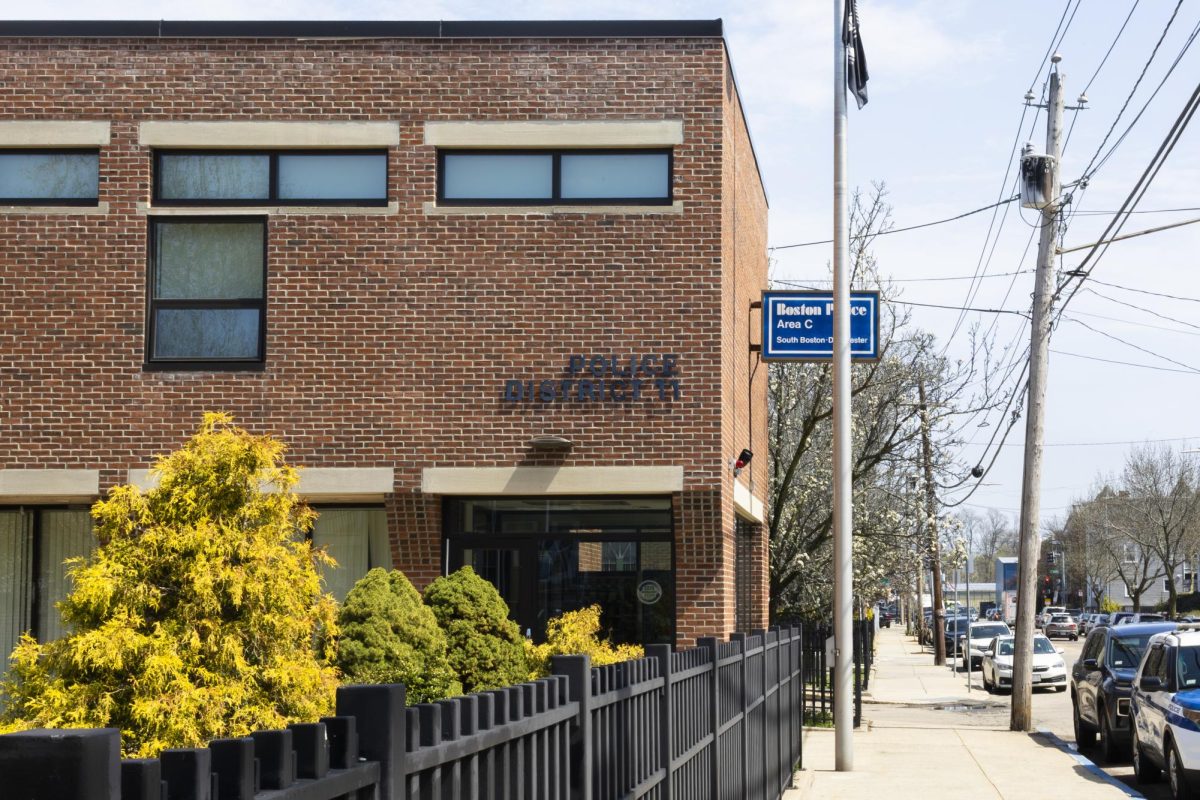
Police were responding to a carjacking call near Linwood Square when they came across King in a vehicle he allegedly stole. O’Malley accused King of accelerating the vehicle toward officers in an attempt to flee a crime scene. King was reportedly shot three times while unarmed and pronounced dead after being transported to Boston Medical Center.
An investigation was conducted by the office of Suffolk County District Attorney Kevin Hayden, after which O’Malley was arrested and charged with manslaughter March 19. The office said that the evidence contradicted O’Malley’s statement of events, but they have declined to release body camera footage. O’Malley has since pleaded not guilty and was released from custody until the case goes to trial.
King’s family spoke with reporters, emphasizing his struggles with mental health and calling for the body cam footage of the incident to be released for the sake of transparency. “I want justice for my son,” his father, Stephenson King Sr. said. “I apologize if I seem a little angry, but I am. I’m hurt, disappointed in everything that’s happened.”
Civil rights attorney Ben Crump, who is representing the King family, commented on the disparate nature of video evidence, where footage involving civilian wrongdoing is often released much quicker than that of police. “[Officer O’Malley] was the judge, the jury, and the executioner,” Crump said. Crump represented the families of Trayvon Martin, Michael Brown, Ahmaud Arbery, Breonna Taylor and George Floyd.
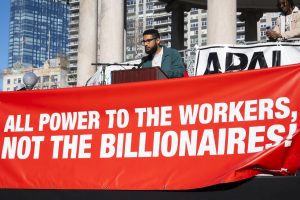
Crump went on to speak at a press conference in a sanctuary church on Washington Street April 9, where family and supportive members of the community gathered to mourn King’s passing. “We are standing here for a reason,” Crump said. “Because we want justice for Stephenson.”
Nicolas O’Malley’s attorney, Ken Anderson, said that his client’s arrest was “unprecedented” and a result of “election year tactics.” District Attorney Hayden is up for re-election this year, though he denied that politics had any influence on his decision.
The shooting was quickly linked by activists and political commentators to other instances of state-sanctioned violence against black citizens, most notably the killing of Keith Porter Jr. by an off-duty ICE agent New Year’s Eve, and the murder of George Floyd in 2020 — the major catalyst for widespread protests and the larger Black Lives Matter movement in the United States. Activists have been quick to note the evolution of the political landscape since BLM’s peak in 2020. Rahsaan Hall, President of the Urban League of Massachusetts, noted that “members of … the activist Black community may be a little more pensive about mobilizing in this moment,” as a result of the Trump administration’s actions.
Politicians and organizations have lined up to defend and condemn the tragedy. The New England Police Benevolence Association, the union that represents members of the Boston Police Department, expressed solidarity with Officer O’Malley in a statement March 21, highlighting the difficulty officers face in having to make “split-second decisions in dangerous and rapidly evolving situations.” The probable cause hearing for the case is scheduled for May 21.
“We must have transparency and accountability,” Rep. Ayanna Pressley, who represents the Massachusetts 7th District, said in a March 25 statement. “The trauma of violence reverberates far beyond a single instance, so we must remain committed to enacting policies that truly keep us all safe.”